Monday, August 27, 2007

Anne and the Gifts Life Brings

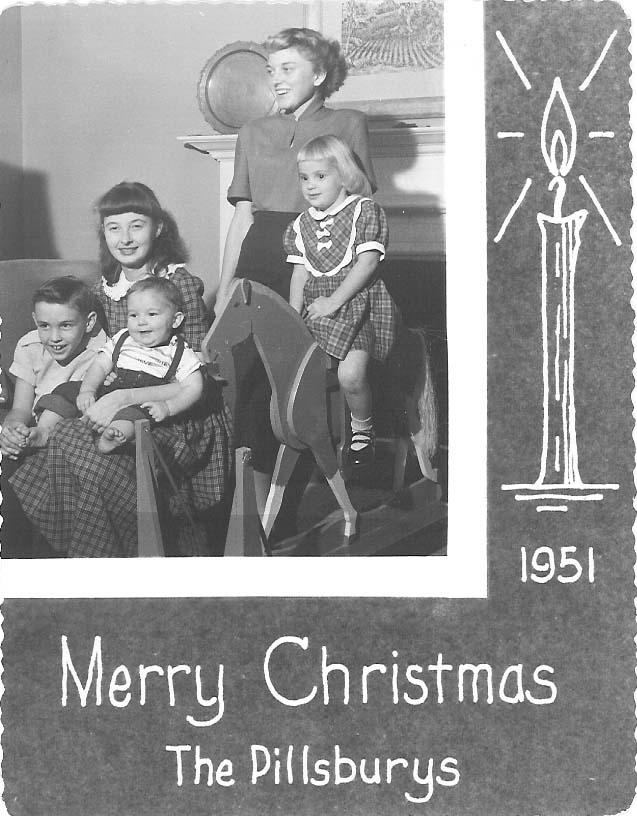
From right to left - Melinda, Carol, Stephen, Anne and Cappy


Anne and the Gifts

The encounter began in a stark waiting room in a Japanese hospital in Tokyo. My sister, Anne Pillsbury Gripp, was occupying a room in intensive care there, having suffered a heart attack while attending an orchid show in Tokyo in 1994. Anne was the owner of the Santa Barbara Orchid Estate located in Goleta, California.

I had flown in to be with her and with her two mostly adult children, my niece Alice and nephew Perry. The next two weeks were surreal, punctuated by bewilderment and occasional humor.

Anne had always had problems with her heart, we knew that. She had suffered from Rheumatic Fever when she was two years old and it had left its print on her health; her cardiologist was optimistic but realistic. She and I had gone through the loss of the sister who was between us in age, Carol Sylvia, twenty years before. Carol had been 36 when she died of a heart attack. You don't like to think about what that might mean to you about your own heart.

Carol was just two years younger than Anne but no one would believe they were related. That was sort of amazing when both their last names were Pillsbury and they, unarguably, had the same parents. Anne was tall, skinny and dark haired with dark brown eyes. Carol was short, curvaceous, blond, and had huge, vivid blue eyes. Anne was a book worm who went on to major in math at UCLA. Carol went to secretarial school right out of high school and went on to dominate any job she took. Anne would become a mathematician for GE right out of college in 1958.

Anne and I had talked just before she took off for the airport to finalize plans to take all of the kids to Disneyland as soon as she was back, mine and hers. When the phone rang that day I picked it up expecting to hear her voice.

That waiting room was a long ways from Disneyland, no matter how you looked at it. There was too much time to think about how fragile life really is and about whether of not that still figure in the bed upstairs would wake up and see us. Twice a day we got to see her unmoving form for 45 minutes.

Carol had died the day before Valentine's Day, 1974. I was 9 months pregnant with my second child then. Later, my mother returned to me unopened the Valentine I had sent Carol. Inside were two embossed cards, one from me and one from the baby she had promised to Godmother. I still have those small cards in my desk. Every so often I take them out and hold them.

The nursing staff did not speak English but they were very firm about the time limit.

While in the waiting room we had little to look at except the other families. Some of these changed over that two weeks; some remained the same.

We could not comprehend when those who shared that small room with us spoke, although we knew it was about the people they hurried to see when the time came. We all of us went up together. Sad events brought all of us there, we understood each other. Waiting and not knowing is hard.

One day I bought a small box of candies and shared it with the lady and her little girl who were sitting cross from me. Her face lit up and she bowed, accepting the small confection. I smiled back, using the word for “you are welcome,” I had just then learned.

That started the Battle of the Gifts. I was about to learn about the Japanese custom of gifting. Giving gifts is a custom that is taken seriously in Japan. Gifts are a major line item for companies and for individuals. Gifts given at specific times of the year even have special names. A midsummer gift giving is traditional and called O-chugen. At the end of the year another gifting period blossoms with presents and is called O-seibo. Those are usually gifts given to those to whom you feel indebted.

The next day I was astonished to receive a beautifully wrapped gift handed to me by the lady who looked like a porcelain doll in western clothing. She smiled and bowed gracefully. I bobbed and accepted. Inside was a perfect pastry enclosed in cellophane. Delicious.

It was a much needed distraction at first. The gift-giving continued every day and the value and permanence slowly grew. Delicacies to be consumed turned into a small book, a set of cups, tea to be used in the tea cups. Alice and Perry began wondering aloud where it would end. So did I. Eventually, we found that out.

Talking to the English manger of the hotel where we were staying I learned that it might never stop. Frightening thought. But it was a distraction we all needed, I think.

Every night, on the way back to the moderately priced hotel, I looked for shops where I could get arm my self for the Battle of the Gifts. I enjoyed watching the shop girl wrap it. They were so fast and precise, making an art form of just handing it to me, small bow included.

Back at the hotel I would put it carefully on top of the tiny chest of drawers. Japanese hotel rooms are well appointed, but they are very small. Space at a premium the small bathroom had a bathtub that did not allow for stretching out anything. Breakfast in the morning was classical Japanese, grilled fish, Misho soup, tea and rice consumed rapidly at a counter in one of the small places we passed on the way back to the hospital. Occasionally I would hear from my children or from my husband back in Santa Barbara, but they sounded distant over the phone. They laughed over the continuing Battle of the Gifts.

Then that Battle drew to a close in a way that was very unexpected. I had been in Japan for two weeks.

None of the staff spoke English well enough to tell us what was happened. Straining to understand what the prognosis might be we had decided to put her on full life support a week after I arrived. I had immediately contacted the American Embassy to ask for translation services. They hung up on me after passing me around for an hour. That happened more times than I can remember now. Then I remembered a friend had mentioned the American Express would provide some services to gold card members and called them.

Within a day they had arranged for a specialist who spoke English and Japanese to talk to the physician overseeing Anne's case and communicate with Sue, my brother Cappy's wife back at Stanford Medical Center. Sue is a physician specializing in Oncology and Radiology.

Sue's tones were professional and sad at the same time. Anne had suffered a heart attack. If this had happened out on the street with friends present in the United States the emergency personnel called would have suspected a possible heart attack. In Japan heart attacks are far rarer. Anne had suffered irreparable brain damage. Her body was there, she was gone.

Alice, Perry and I needed to talk.

Sitting on the beds in their small room we cried together. We all knew what Anne would have wanted, there were no doubts.

I flew home alone. Alice and Perry stayed to arrange to have Anne medivaced back to the U. S. so she could be disconnected and die, as she always said she would want to do under these circumstances, at home in her own bed.

I still miss Anne. We took turns reading her favorite books to her and she was never alone. Dawn, my second oldest daughter, was reading her Pride and Prejudice when Alice said that Anne had stopped breathing.

When I was getting ready for the memorial service I discovered how many people remembered the pumpkin pies Anne baked for everyone every Thanksgiving I remembered the many garments and other items she had made for her family from a huge bolt of bold red and white stripped material that felt like it was made of canvas. I got a skirt and blouse; I was five then, that was scratchy where it touched the skin. I also received a jacks bag that lasted better than leather.

All the men in the family got short sleeved shirts that made us look like escapees or a singing group. It was so Anne, we used to say. Anne loved giving gifts. I thought about that during those hours in the waiting room, thought about the gifts, small and large we had exchanged over the years and what gifts mean.

In Japan gifts are very conscious parts of life. After those weeks in that stark, small, waiting room with the ugly linoleum floor and those hard chairs giving and receiving looked different to me. They mean more and now they are more than objects. Gifts are many things. Anne's death and the Battle of the Gifts taught me many things. Some of the gifts life brings, the least visible, connect us across time; the greatest gift, love, connects us us past death, and that I find as I grow older and hopefully wiser, is the most precious thing we ever receive.

Saturday, April 14, 2007

James Dean: A Recipe and a Memory

A Recipe and Insight from the life of James Dean.


The Eclectic Sandwich Delight

(Ingredients vary depending on what is available)


Peanut Butter

Strawberry Jam

2 slices of bread

onion so thinly sliced you can see through it.

Tomato “ditto”

Lettuce “ditto”

One of the big, fat dill pickles also sliced very, very thin

Potato chips, crushed to the tiniest possible shreds

Ketchup for dipping mostly


Lightly toast the bread so there is no brown but it is just a little crisp. Slather on the peanut butter on one piece and the Strawberry Jam on the other. Layer on the onion and tomato so that the whole surface of the peanut butter is covered only once with each. Then sprinkle with the well crushed potato chips and cover with the very, very thin slices of pickle, and just enough pickle so that the surface is barely covered. Sprinkle lettuce with a touch of Ketchup on top and cover with the other slice of bread.


Jimmy cut his on the diagonal. I liked that. Served with lemonade and a small glass of milk.


I saw this sandwich prepared and assembled and then consumed by James Dean in the early 1950s. I was struck at how precise he was and how thin the tomato and onion were sliced. Jimmy and I both wore glasses nearly all the time so I tended to lean in close to watch and nearly got my nose trimmed. I was very young at the time.


Jimmy had dropped by at lunch time for a chat and most probably for a bite to eat. He was very skinny and Mom was sure he needed a meal. His Mom and my Mom had known each other before Jimmy's Mom died. Jimmy ate lunch sitting at my small table with me in the kitchen. Mom had already eaten, actually. Jimmy showed me how to peel up the top of my sandwich (Beanie, with just peanut butter and the jam) and sprinkle on the crushed potato chips. I loved it. Then he let me have a bite of his; interesting taste.


Jimmy had unusual tastes in food but when he assembled things it worked even when you thought it wouldn't.


(From my book, What Jimmy Taught me about Growing Up.)


After lunch we went into the back yard.


Mom was showing her roses to Jimmy, pointing out the colors and other details like aphids. The War of the Aphids was a theme that brought on updates at various times to all of us. I wandered off. I was not much interested in roses. I had been pushed into a small grove of them some months earlier and had not forgotten the experience of being a pin cushion.

I went off to play under the Avocado Tree while they talked. That was my favorite destination in the back yard for making mud pies. The Tree murmured, making comforting, familiar sounds as its leaves danced and wavered in the wind. Being under the Tree made me feel like there was a tent over head and under the Tree it was always cool.

For some reason the mud there was especially fine grained and therefore looked like chocolate. Didn't taste like chocolate though. I had already ascertained that on a previous occasion. As I made up hamburger patties of mud, folding these into other shapes suddenly an idea struck me.

I had something I wanted to show Jimmy. I knew he would like to see it; he would appreciate it as no one else would. They were just walking back into the house when I grabbed Jimmy's hand. I told him he had to come look at something – right now. My mother smiled and went in the house. Stevie had started to cry, I could hear him.


A tingle of excitement runs through me even now when I remember dragging Jimmy by the hand over the concrete pathway along the side of the garage. My arm was up at an angle because he was so much taller than me. I looked ahead to the rather dense and tall bush against the back fence. On one brief occasion I was off the ground because I was pulling so hard. Jimmy was going to be impressed, I just knew it.

I rounded the tall bush and pointed, triumphantly. The bush leaned slightly outward, creating a small alcove behind it. There was just a foot or so of space and there was my prize. I had been visiting it for weeks. I don't know how it got there. It certainly had not been ours. The dead Tortoise had been past all hope when I first found it there spread eagled on its back. I had been watching it being eaten by ants for these many weeks, never mentioning it to anyone. I tried to look every few days, although I knew that I should not tell Mom. She would remove it, I was pretty sure.

Jimmy looked at the Tortoise for a long time, just standing there. Then he squatted down to get a better look, pushing the bush aside. He looked at me and smiled, his eyes crinkling up at the corners, as I stood there waiting for his reaction. I have lived a long life but I have never again been so right about someone who was still nearly a stranger. Jimmy was delighted; he nodded. We understood each other.


Then Jimmy told me that he had watched the same process himself back in Fairmount only it was with a whole cow.

I shuddered. Cows were huge and without shells you could see much more. Jimmy was the first person with whom I discussed the physical process of mortality. Normally, when things like gold fish died they were immediately buried, usually in the toilet after a brief prayer. That did not allow me to check back and see how things were going.

I had yet to persuade my parents to let me bury a deceased goldfish in a Band aid box to be dug up later for minute examination. The tortoise came first. Jimmy filled me in on various aspects of the process with horrid expressions of face and gestures of hands as he made rubbery faces that made me laugh.

We had a cat then, Tiger Lady, later Tiger when his gender was correctly identified. Tiger was still a fluffy kittenish presence then. Mortality was an issue still past my horizon for anything but goldfish and the tortoise. I was curious about the physical process of death, but Jimmy did not leave it there. With Jimmy answers led inevitably to more questions.

Jimmy told me right then and there that the essence of the Tortoise was gone. Its form remained but the thing that had built it out of the raw materials of the Earth, just like we were built, had left its body and moved on.

With just a few words Jimmy had given me more things to think about. From the process of the deterioration of the physical body we had arrived at the question of the force that created and moves the body while it lives and the destination of that essence after death.

Those questions were revelations in themselves.

How were we built out of the Earth I wondered, looking down at the dirt? I put that thought away for another time. Now I wanted to know where the Tortoise had gone, if anyplace. I asked Jimmy. He paused, cocked his head to one side and looked right at me. He told me he did not know, exactly; he wondered himself if it was a place we could really understand while we were still in our bodies. Perhaps we would have to wait to know. He told me that if he found out he would tell me. He nodded as he said this. Jimmy did not mind admitting the limits of his knowledge.

The death and aftermath of the life of Tortoise opened up a series of conversations about the nature of the world to me that filled several of Jimmy's visits and spilled over into conversations with my father, too.

Death, Jimmy told me, was not the end of the life of a Tortoise any more than it was the end of our own lives when death came. The essence that made us what we are continued. When he told me this he pointed out that I could not see the wind, only the things the wind carries. I was only aware of the light when it was gone. But all of these things were far more tangible than the essence that created and moved the Tortoise. All continued; Death was transition and illusion.

I already accepted that Jimmy would not lie to me; that was part of the trust that came with his reaction to the Tortoise. But I had learned that people would tell me things that were not strictly factual and often thought this was funny. Jimmy didn't do that. Jimmy told me the truth as he saw it about everything that came up. Then he told me to think it out for myself and never, never accept what others say as the truth until I had done that.

That was the first lessons that Jimmy taught me. Death is not the end; the essence continues; question what you think is true; trust yourself. These were lessons I would carry with me always.


Monday, September 19, 2005

Why James Dean is worth remembering.


Our Christmas card the year I met Jimmy

Earlier this month the Fresno Bee published yet another article, citing someone who postures as an authority on the life and significance of James Byron Dean; this September 30th will mark the half century anniversary of Dean's death in a automobile accident in Cholame, California. During his life time James Dean was not famous. At the moment he died only one of his three movies to have been released was East of Eden. Rebel Without A Cause was not yet in the theaters.

When he died no one had yet considered the tiny body of work Dean left behind as his legacy. No one expected him to die. James Dean's movies represent the only tangible statement of his skill. But those movies in themselves proved to be a monumental commentary. The three films illustrate ability- that plumbs depths and exhibits an intelligence unusual in an actor only 24 years of age. The roles he created in those movies expand to dominate the screen against far more experienced actors. The intelligent portion of Hollywood understood that, but as with all professions only a few could see that. Most people who are fascinated by the magnetic appeal Dean was able to project ascribe that appeal to those causes that more define themselves than they do James Dean.

"He represents eternal youth," Legnon says, leaning on the memorial. "If James Dean had lived, he wouldn't be the icon he is. He'd just be an old guy, like [Marlon] Brando or Montgomery Clift or any of the actors that Dean came of age with."

It is easy for strangers to ooze opinion about someone when that person has been six feet under for a half a century. James Byron Dean died when he was 24 years old; he died having completed only three movies but those movies burn with the intelligence James Dean brought to every facet of his life. Many young actors are the product of the need in Hollywood for fresh meat. Not so with James Dean.

Shelby Legnon, who never knew Jimmy, says that if Jimmy had lived he would have been, “just some old guy, like Brando of Montgomery Clift.” No one could be more wrong. Legnon did not know him.

But his movies speak to those who possess the wit to understand.

Jimmy was an individual who saw clearly and who had values that were defined and honed through years of thought.

If he had lived Jimmy would have transformed the entertainment industry; injecting the vibrant ideas and values that moved him originally into acting. Because that industry supplies the memes and cultural content of so much that we, as Americans, live and breathe every day of our lives, and because the world watches us as the edge of cultural change, it is fair to say that James Dean would have changed the world. That was his intention and his aim; to impact the world through the craft of acting.

He understood how it could be used. He intended to use it.

James Dean had confronted such issues and the life of the spirit, mortality, the profound differences between people, and the ideas that drive the world when he was very young. He began life as a Mama's boy, enveloped in maternal attention. He shared with his mother a world of make-believe.; they also talked about ideas. That world was shattered when his mother died and he was relocated to Indiana to live with his aunt and uncle, two people who were decent, kind, hard-working and very different. He was a sensitive child. He did not forget his mother, he continued to remember and to grieve, creating an intense internal life of ideas. Those ideas eventually took him into acting. People who are highly intelligent and creative make their own rules.

I knew James Dean; he was no hormone-driven Hollywood wind up doll. He was insightful, intellectually alive and very aware of the kind of people and motives that confronted him in the reality of Hollywood, 1955. To be successful in Hollywood you had to play the games Hollywood expected. Jimmy understood people; he understood their limitations and their prejudices. He had learned to project what was expected of him.

The Hollywood perception of James Dean is colored by the timing of when he died and by the limited access he allowed to those whose approval he needed to succeed in the career he was passionately pursuing. If he had died three years later he would have had time to let Hollywood know who he really was; if he had died ten years later he would have changed Hollywood. But that is not what happened.

There was only one James Dean. How much of him you saw depended on how much it was safe for him to show.

Jimmy knew what Hollywood wanted him to be so that is what they saw. He was much more.

I have spent my life fascinated by ideas and James Dean was a major influence in creating that interest.

James Dean explained to me the process of photosynthesis by telling me when I was just a small child that, “Trees breathe; Live exists on Earth because the green growing things breathe in the light of the Sun and produce the oxygen that we, and all life, needs to survive.” An amazing way to make that process real and viscerally available to a child.

James Dean loved thinking about the processes of life. He loved books and the ideas that roil in the mind when that mind weaves the possibilities of what is now with what could be. He pounced on new facts with delight.

The first time I met Jimmy it was over Beanie sandwiches in the kitchen of the family home in West Los Angeles. He was a student; I was a kid. He was the kind of person who listened to children and responded thoughtfully, by which I mean he was able to connect and engage in a real discourse, not talking down to me but exploring the ideas that found their way into our conversation, introducing ideas as part of the text. With Jimmy if there was conversation there were ideas to discuss.

It was on that very first visit that Jimmy and I discussed mortality. It was the first time anyone had mentioned the subject to me. I had been watching a tortoise dissolve back into dust, so to speak. I had discovered the tortoise already very dead behind a bush in the back yard of the house. I was fascinated by the process of its dissolution as ants carried it away and it shrank into itself. I had not told anyone else because I knew how they would reaction. The tortoise would evoke shrieks and Mom would remove it.

Given a chance I hauled Jimmy back to look, too. Jimmy was delighted. He proceeded to tell me about observing the same process with a cow on a farm back home. Then, squatting down for a closer look, he told me that the essence of the tortoise, the thing that had make it move and live, was gone. The same happened to all that lived, he told me.

From that time on we talked about ideas whenever he showed up for a visit. Towards the end of the visits he had started talking to me about books he was reading and the ideas that excited him in those.

Jimmy was looking forward to a career; that career would only begin with acting. He mentioned moving on to directing and other work. He had been unhappy with the way a book he had read was made into a movie. The book was Fountainhead. He wanted to remake it because he thought the characterizations were flat and had failed to evoke the wonderful potential of the human life. I suspect now, looking back through a life time that has afforded me the opportunity to know more than I want about Objectivism, that if he had tried to do the remake he wanted Ayn Rand would have strenuously objected. Jimmy had a strong sense of spirituality that would have offended her. Jimmy would probably have ignored her objections. He was like that. He knew what he wanted and he was determined.

I have many memories of Jimmy; he always found time to talk to me and since we shared a fascination with ideas there was always lots to discuss. The essence of spirit, the past and how we know and understand it; the flow of time. All of these things were subjects we discussed. He did most of the talking, naturally. I listened carefully and asked questions.

Does a shallow, self indulgent kid greedy for fame and the potential for self importance and what fame can buy spend that kind of time with a child? No. Would that kind of discourse slip from the lips of an angst ridden pop tart? Hardly.

If Jimmy had lived he would not have become a fat, self-indulgent has been. He would have taken the capital he had created in name identification and respect and invested it in projects that pushed the edges of thought in new directions. Hollywood would have followed his lead because he was worth following. He would have started projects for kids in Fairmount, Indiana; he would have, perhaps run for office. He would have done good in all directions. He cared about people and he cared about the kind of world his generation would leave behind.

I know that to most people he exemplified the undirected angst of youth. Ironically the image he left immediately in the minds of most Americans was the product of hard work at the craft of acting. To see that perhaps Legnon should stand back and consider the intellectual vigor it takes to achieve that outcome. Jimmy was directed, focused, intent, inquiring and passionately interested in everything around him. That remains the unspoken and compelling presence that continues to fascinate, even if the viewer does not understand why.

I wish you could have known him. Then you would understand why he is worth remembering.

Thursday, June 09, 2005

Beatty vs. the Governor: Send Arnold back to Hollywood

I read with interest the article transcribed from a speech given by Warren Beatty today from the keynote address delivered at the graduation ceremony for UC Berkeley's Goldman School for Public Policy. While I agreed with the underlying sentiments expressed I found myself wishing Mr. Beatty had stood up for actors. Certainly there is no reason to assert today that actors contribute less to our common happiness and wellbeing than do politicians. I would make a case for the contrary. I know one honest politician but I have known several honest actors. And actors do not expect the lavish retirement accorded to members of Congress and the larger legislatures. They know if they don't give the audience what it wants they could starve. A laudable attitude that keeps them on their toes.

The state of California would be far better off if this actor turned governor were still making the same quality movies for which he was so well known.

So I would I suggest to Mr. Beatty that his respect for politicians is misplaced. We all have wish lists of issues but first and foremost America needs to return control of governance to the people and reinstall accountability in governance. That is after all, the original idea. That does not mean handing control off to a new form of aristocracy which is what politicians have become.

Being elected to office is the equivalent of winning the lottery.

It has been going bad for a long time but it was the idea that politicians can experiment on us that destroyed the basis of accountability. The ideas of the past, grounded in the failures of socialist thought and utility theory do not work. With the advent of socialism in the early 1900s the practice of installing clever ideas with no proof they would work became accepted. Theories are nice but should never be used without full liability for harm caused and a comprehensive impact study, not in business and not in government.

No-fault divorce, welfare reform, and other nifty ideas foisted on us through legislation have destroyed the expectations of generations of Americans. It has to stop.

And in a world where Americans cannot trust the electoral process discussing health care is like shuffling deck chairs on the Titanic.

We are as able to audit the accounts of those convicted of crimes like Enron as we are the ballots that elect our leaders. Therefore, America has no reasonable expectation of an honest vote. That should scare you. So, while I very much enjoyed the warm sentiments and insights of Mr. Beatty I would urge him to rethink his priorities.

Consider for a moment the retirement and benefits packages of those who serve. Definitely not what they voted up for us. Personally, if I had my way I would put the Congress on whatever privatized Social Security system they elect for us and give the elderly the retirement packages customized for Congress. To expensive you say? Just cancel the present war and we can afford it, I answer.

Which brings us to another issue on which I disagree with Mr. Beatty while sharing his sentiments. Taxation is not the best way to equalize wealth. The robber barons of California went after the money with the help of various legislatures and then bought respectability and acceptance, which was all too cheaply for sale. Being able to buy acceptability without fear of liability makes thievery carried out under the guise of “business” and “government” far too attractive. If this had not been the case, if liability were the disincentive it should be, then the problems with California's 'energy deregulation' would by now have resulted in the seizure of the ill gotten gains and hopefully restitution would have been rendered to those harmed. Jail time is far too good for them. Give them jobs at Walmart. Wealth is not the problem; what wealth makes acceptable to us is.

This kind of predatory behavior is not a recent development and predates both Mr. Beatty and myself.

Far from representing a forgotten era of capitalism the Roaring Twenties was alive with larceny, the legacy of law and practice already distorted by the growing partnership between government and big business that is only today reaching its full flower through the logical consistency of the NeoCons. The motto of these Grandees of Greed ought to be, “If you are going to steal, steal everything.” No one can deny they are efficient. Who else would have ended combat pay the second a soldier is wounded and then charged the injured for food and treatment while still in the hospital, rendering a bill on discharge?

One can imagine the murmurs of awe and respect issuing from the now dead lips of Nazi bureaucrats.

I will happily accord any politician the respect I give my plumber if he or she does the job as promised. Politicians deserve exactly as much respect and profit as they earn by fulfilling the duty they owe to those who pay their salaries. Perhaps at sometime in America's past being a politician meant a life of service but for longer than either Mr. Beatty of I have lived being a politician in America has meant, for most of those 'called' to that profession, serving up Americans to the interests of power. Being an actor is a profession far more worthy of respect. Honor is in any work well and honestly performed, not in the kind of work. Any actor posing as a corpse can tell you that.

So, Mr. Beatty, give actors the respect they deserve. I'd rather have a bad actor acting than one playing politician any day.

Thursday, June 02, 2005

Faith and Religious Practice: Quantum Consciousness

When we accept the presence of the sacred in our lives and begin to listen to the flow of spirit coming to us from a place unseen we are confronted with a profound choice. Will we choose to hear or will we shoulder past the ineffable and continue on our way, ignoring what our minds tell us is irrational?
No choice comes without risks. But what is risked is not necessarily apparent, either to the one confronted or to those watching the logic of choice work its way out into the material circumstances that will record the totality of our individual lives.
The verities of the religious experience may be very different than we have thought.
This goes to several questions. One of these touches on the nature of reality, which we are beginning to understand through the insights offered through quantum physics as very different that previously believed. It is not the finite, knowable world that we saw it to be at the beginning of the 20th century. Most human institutions still rest on the assumptions of that century if not on an even earlier century. The structures of human institutions, born from the ideas of generations past, function as repositories for the conservation of moral and institutional capital and are therefore falling edge indicators for coming change.
This takes us to the question of faith, not in the way we have traditionally understood this but in a new way that I characterize as quantum consciousness. According to quantum physics each part of the whole, no matter how far removed from all others, is actually in immediate and intimate contact. This means that the faith derived article of belief stating that all life connects is literally, physically true, the spiritual then being understood as an aspect of our nature heretofore seen as separate and problematical.
But if we are all cojoined, both with our own spiritual nature and with the material world that extends from that nature then this is not faith but intuitively derived truth. There have been indications for a long time that those arenas of human insight, including art and literature, actually function as predictors for oncoming waves of change in how we perceive the nature of reality.
Dr. Leonard Shlain's book, Art and Physics, Parallel Visions in Space, Time, and Light, notes the relationship between the underlying conceptualizations in edge art and their predictive function in physics.
What, then is intuition and how can we use it as a tool for human progress?
Is religious intuition a partially understood means through which we as humans may understand our own nature and progress towards some unseen horizon? This would seem to be the case. But as with all intuition this is subject to interpretation filtered through the veil of ideas each of us uses to construct the immediate nature of our everyday reality. Because we see through those filters of our own internal experiences we use iconic representations that provide a context for meaning. This in large part explains the difficulty in communicating between individuals coming from different perspectives. But only in part. We can also be mistaken about what specific iconic representations mean to others seen through cultural filters when we translate these into language.
Assumptions about what may seem obvious are a constant block to real communication.
We are spirits living in bodies that see the world through images, language and ideas that may vary widely in understanding. Our backgrounds, genders, cultures, level of spiritual development, education, age, and other factors moderate our 'beliefs.' Our beliefs create the reality with which we react and interact with others.
We are spirits in process of becoming. What we are becoming lies beyond the horizon of our ability to understand. But if we are connected in the way that intuition and quantum physics now indicates then the comfortable and artificial limits we have provided through human culture, practice and religion are as fragile as a curtain suffering long exposure to the sun. It is ready to tear and only our assumptions are holding it in place. Those assumptions are what created it in the first place, let's remember.
So what does this mean to us as individuals and as a people? It means that as individuals we need to confront the nature of the world in which we live and the nature of the world that lives in each of us. Today that need is greater because we are living in a time of transition. Every institution of humanity is showing the strain of long use that has worn it to shreds. Those institutions, forged from the ideas originating in the human mind, are failing because they are not modeling the coming change in consciousness that has been so long predicted.
Baldly stated, that change is from a hierarchal structure for human organization to a flatter, matrixed model for human relations. Equality expressed spiritually.
This is evident everywhere, even in the excesses of hierarchy reaching its logical conclusion as a form of resistance to change. In politics today it can be understood as the one predicted Rapture, that being in truth, the realization that all are one, Christians seeing this as a union in the spirit of Christ, others seeing it through the explanatory iconic representations of their own belief systems. Interestingly enough, nearly all human religious have predicted a transition in this period of time, another argument that the intuition driving these visions has predictive value.
As with all monumental transitions this one is tumultuous, impacting many in immediate ways.
The form and content of churches, giving place to the continuing human need to experience the sacred, are changing in unexpected ways that are leaving members of the older generations bewildered and isolated. The cognitive process to which the younger generations have been subject may well have changed them organically far more than we yet understand. The familiar structure of the human experience, firmly invested in a hierarchal world view is rapidly growing flatter through a series of punctuating events. This bald fact has been observable in business, with the downsizing of the Fortune 500 through the collapse of middle management with the advent of the desk top computer. This has been balanced by the almost hysterical desire of those in positions of power to hold on to the past by accumulating reservoirs of wealth.
The effect of quantum consciousness first appeared in venues for human action that were most easily modified by the forces of market choice. America, representing the optimization of freedom remained a mystic beacon for human hope even as the objective conditions that had made this true were diminished. Where choice is possible, in religion, in occupation, in relationships, choice has been exercised with growing frequency. We are seeing it last in government and other organizations that fail to allow for the modifying power of individuals voting with their feet and finances.
Quantum consciousness is the realization of human freedom, not in the political realm but in all parts of all venues for action.
Individuals from all parts of the world have accepted the idea that they should by inherent right be free. All of us are now trying to understand what freedom means practiced in the individual life. Our beliefs and the hope it generates may be changing the larger direction through the compiled force of quantum consciousness itself. Nothing is separate, as we are coming to see.
The body of human knowledge has increased exponentially. It is no longer possible for any one human being to know everything in even a subsection of one discipline when only ten generations ago it was possible for one individual to have working knowledge of the whole of human knowledge derived from Western Civilization. This rate of change has only shifted upwards with the interface created by the presence of the Internet and other means for the dissemination of memes that would previously have taken years instead of seconds or minutes to change the idea sets of individuals across divides of space and time.
So what does this say about how we should view religious practice?
With respect, with an open mind and with the view of understanding it as an overlooked tool for human understanding of the entire human experience.

Evangelicals are hypocrites: Do not emulate them.

Evangelicals are hypocrites: Do not emulate them.

It is all well and good to call for the signing of endless petitions asserting some kind of ownership in a belief in Christ, but those are empty words. No one owns the message; but each of us can deliver it. How we do that tells everyone whether or not we are living in the Work.
It is not hard to tell. No one mistakes the concentration camps as acts of Christian love. No one who really looks and listens can believe that the evangelicals now pounding their chests and staking out the moral high ground are about anything but deceit. That many of them may be deceiving themselves as well is pathetic.
Those evangelical Christians who offend by using words to change His message are not acting as Christians. But are you? Christ is not about politics in the sense that politics can be used to force others to act. Christ is demonstrated in us when we act as Him, allowing the Gift of His spirit to move us in our own lives.
Sorry if this seems unkind but it should be so obvious. I spent most of my life as an atheist until Christ claimed me. But now I have no doubts.
Reclaiming Christianity cannot be done with words. As the gift was given so must it be lived. Only your acts have the power to affirm His message. Consider for a moment the message of Christ.
Christ gave us his body and blood as a meal to satisfy our needs. He did this freely. He could have at any time avoided the pain of torture and crucifixion. He welcomed it. This was not in His words but in the sacrifice of His human life on the Cross. That was the first part of His gift, but not the greater. The fact of His eventual death was determined at the moment he was born. What could death, even death on the Cross, be to the Son of God who clearly saw beyond its veil?
That death meant nothing. But then, He rose from the grave and appeared again among His followers to speak and to teach. He told them He had still one gift to give. And this time He gave His Spirit. It was not in words that He gave His spirit to dwell in each of us. This He did as a tangible, living act that broke His spirit like the loaf of bread He had held in His hands at the last Supper. After that moment in time we dwelt in Him, as He lives in us, all of us. It does not matter if you believe in Him, He lives in each of us no matter how we doubt and fear.
He has given this precious gift to each of us.
His actions changed the course of history. Because of His acts today we are different. The reality of his acts and Gift sent a message into the world that became greater than its parts. This happened because Christianity was not founded on words but on actions. If you would reclaim Christianity then you must retake it by the compounded acts of your life speaking out the simple but profound beliefs spoken by Jesus with His own life.
We are One in Him. What you do for anyone else so do you do for Him, directly and immediately. Love others as yourself. Love yourself so that you can love others.
This was foundational to the beliefs of the church Christ left behind in trust.
It was this belief made manifest throughout the first centuries of Christianity that changed the face of the world, moving humanity towards a vision of love and unity through the life of one Man.
As it was so it is today.
So toss that petition in the trash can. Now take your life, which is a gift from God, and make with it the living reality that speaks the essence of the message and the reality that is our living gift from the Messiah. Make your own statement. By so doing you will confound those who misuse Him.
Instead of requesting that someone else, in this case the government of the United States, care for others take up the duty left to you by Christ and do it with your own hands. In so doing you can bring the consciousness of Christ back into the world. Where there is disease, heal, as did the Christians of the early years.
In those early centuries the cities of the Roman Empire were frequently subject to plagues that killed thousands. As a practice, pagans had abandoned their own relatives to die when they fell ill. But early Christians, recognizing these victims as extensions of the Body of Christ, made them comfortable, feed them and tended to their needs. As a result as many as 70% lived. This was living the Word; the extrapolation of faith into acts.
The early church was a tool for making the Word real in the sight of all humanity. They heard and came. But this process was not through preaching words but in the eloquence of action.
There were many reasons for becoming Christian. To be Christian was to be persecuted, marginalized, despised. But it was also a force for change and the least among pagans saw, heard, and came.
For a woman becoming Christian meant that she owned herself. She could not be sold into marriage when she was as young as 10. She was not required to abort or kill her babies if her husband did not want them. She controlled her own property. If her husband died she was not given back to her father to be sold again into marriage. She could control and sell her own property and hold positions in the early Church. Many early Christian women did just that.
The promise of freedom built an early church culture of benevolence and love. 60% of early Christians were women. We know these things from careful study of the objective facts left behind, not from the obfuscations of later generations of 'church fathers.' Read the Rise of Christianity by Dr. Rodney Stark, a study in the sociology of the early church if you doubt.
The human spirit was hungry for more than food. They also hungered for freedom, especially the least of these, women. Women had no standing or rights in the pagan world.
That was the living truth on which Christianity flourished, the living word of Christ in works.
Where there was hunger, they feed that hunger. In a world that hungered mightily for freedom Christianity was a feast of the spirit. We know Christ today because that early church feed all of the hungers of a humanity with many needs.
We hunger for freedom today as much as for food to fill our bellies.
Where there is want and lack fill those needs.
It is much easier today than it was 2,000 years ago.
Now we have cooperative organizations enabled through our culture that allow us to donate, work, teach and heal with our spare time. Because we are more productive we have spare time. Go into your own community and see what needs to be done. Then do it.
Given the direction of the government of the United States and the message now being delivered by the Evangelicals awaiting the Rapture in the Rose Garden, there is, every day, more to be done.
Stop giving unto Caesar what is not due to him. Today you can choose. You can start giving to those who hunger for all of the things that the early church gave to those who they touched. Those things are still needed. You can hold up a mirror that makes the lies that offend you obvious to all who see.
But do it from your own heart, from your community, and from the love that Christ gave you without using the coercive power of government.
Christ never voted for the lesser of two evils and neither should you.

Monday, May 30, 2005

A Lovely Tea at the White House with Laura Bush!

Jacque Stafford of  Colorado, a good friend.
(Melinda took the picture)

 
Thanks for the Memories 
The White House – May 11, 2001
By Melinda Pillsbury-Foster

The tea was held upstairs, past open doors that held the portraits of First Ladies and mementos of previous administrations. The People’s House is large enough to hold all of the variations of which America is capable. Therefore it must be large, more on the inside than in any other dimension.
We scaled the broad and beautiful stairs while listening to the floating music of a military string quartet that played in the foyer across a gleam of marble flooring. The music drew us on.
Various of our number stopped to study the portraits of the presidents that hung on the walls and more than a few paused in front of the bust of Lincoln that gazes into a place far away at one side of the hallway.
   The People’s House hushes voices and fills the heart with pride.                                                                   
  We have known so many disappointments and failures. The light was gold and clear drifting down to touch the marble and gleaming carpets.
The event was everything any of us imagined it could be. We had dressed accordingly.
The tiny pastries epitomized all that is delicious. As rapidly as we could empty the trays they were replenished by the hovering servers. Our noble best did not suffice to empty even one before it was whisked from sight to make way for another.
The day was warm. So instead of sipping hot tea our thirsts were quenched by the most excellent iced tea, delicately flavored with just a touch of mango. Cautioned not to take souvenirs a few of our number did tuck a single paper napkin into a dainty purse.
We basked, remembering the hours of labor that each of us have invested in bringing this administration home.
Pictures were taken, smiles and words exchanged with the First Lady. She shared with us her hopes for a better tomorrow through her work for all children everywhere. Her hopes were made tangible and accessible through programs that enable each to work within their home and community. We listened, moved and delighted with her simple informality.
The contrast served to remind each of us that this administration is very different from the last.
The People’s House is large. It is not so much a home as a symbol and destination for thoughts and deeds. We snapped our own pictures; unofficial mementos to be savored over and over again through the months and years ahead.
Tea. Pastries. Music. A lavishing of thoughts and a reminder that the building is a symbol of things we cannot touch. Those things we can and did take with us.

Laura, two other NFRW Regents, and Melinda in red

Raspberry Gumballs and the President

Raspberry Gumballs and the President As told by Little Carolyn to her Mom.

Please note that in 2012 much of the anguish suffered by my parents and others in the family was explained when I realized 'Little Carolyn' is a psychopath.  Accepting this was devastating, but necessary.  Recognizing the signs of psychopathy are important to all of us.  No matter how painful it is better to know and take action to protect ourselves and others we love.   January 27, 2017.


She hungered for raspberry gumballs. These ecstatically wonderful delights could only be had from the gumball machine at the local Safeway Market. She knew it was after curfew. This limitation was an annoyance that had been mandated by frisky high school students wandering through the night looking for very different excitements. This could not apply to her. She was law-abiding and careful of the proper rights of others.
Little Carolyn was always a law unto herself.
She got dressed. Her aunt would never know. She could almost taste the gumballs now.
The Safeway was just a few blocks away, a matter of a five-minute walk. She had often ventured into the night on some such small adventure, but this time it would be very different.
The place was pretty quiet except for a clutch of people around the checkout stand at the other end of the store. Little Carolyn, standing around 4’ 8," ignored them, eyes firmly on the source of coming delight.
The coins clinked into the slot and she turned the handle. The machine groaned, coughed, and fell silent. No raspberry gumballs appeared in the spillway. She tried again. Still no gumballs. She knew that appealing to the store manager would result in a smirk and dismissal. That had happened all too often. The gumball machine seemed to be sneering at her.
"Hey! You can’t shake that machine!" Little Carolyn looked back to see a friend of her grandfather’s glaring at her. She had to look way up as he was well over six feet.
"It stole my money and it is not going to let it get away with it – this time." She returned to her activity. Smack.
Little Carolyn felt herself seized bodily and hauled off.
"Apologize to the Manager, Carolyn. Your grandpa is going to be very upset when he finds out."
"No. This machine steals my money and the manager won’t give it back or fix the machine. He promised he would the last time. Grandpa would say I was right to insist on having the gumballs. He might not have wanted me to hit the machine but…."
"But we do not smack machines. They aren’t our property."
"So I guess it is alright to steal from kids?" She looked up into the face of the 40th president of the United States, Ronald Reagan who had paused while bagging his own groceries in Goleta, California in 1981 to intercede, recognizing the grandchild of an old friend.
Little Carolyn would be hauled off by a grim faced President and his accompanying Secret Service cortege and deposited home into the horrified custody of her aunt. She remained unrepentant.
Authority misapplied that ignores the proper rights of individuals was the issue. It is too bad that with the best intentions in the free world President Reagan failed to see this small revolution as what it really was. Standing up for your rights includes the gumballs – even when authority wants you to shut up and just take it.
Maybe if it had been jelly beans he would have understood.
(The above story is the honest God truth and took place in 1981. I sent a copy of this to Mrs. Reagan on the occasion of the President's birthday in 2003.)


God Bless you, Mr. President

Women, War and the ERA

Women, War and the ERA


The American Revolution would not have been won without its women. They have never gotten the credit they deserved. It is time they did.
They don’t want much. Just equality, something they still don’t have under the existing Constitution. You might have thought it happened. It didn’t. America has not ratified the Equal Eights Amendment. It is time it did.
The bill has been payable for over 200 years. It is time to pay up.
It is a well known but misunderstood fact that the Revolution was funded and fought for the most part from the New England states. New England was able to put a huge army in the field because it had always depended on the productivity of women, who sharing the goals and dangers of the war, redoubled their efforts to allow fathers, husbands, brothers, and sons, to take up arms.
The household based economy of the New England States made up the largest part of the capital investment that carried the revolution through its years of conflict. The women who bore this burden believed that their risk and investment would be repaid through the capital of liberty thereby produced. They expected that after the war they would receive a full share in the freedom won.
Ironically, women were less free after the Revolution than before. Before the war many New England states tied the right to vote to property, so many women voted. After the war franchise was firmly tied to gender. Emigrants who had contributed nothing to the effort to establish freedom were given the prerogatives of citizenship denied to these original investors. After the war the various States asserted the right to further control women through marriage and divorce laws and other measures that restricted their freedoms.
But subsequent generations of women took up the burdens of the fight for a human emancipation they did not yet share. They became the weight and the will of the Abolitionist Movement. They worked for social reforms and against poverty. Again, believing they would be included along with their black sisters and brothers in full citizenship, they were disappointed when the 14th Amendment failed to include them. They were told to wait while the Black Man had his day. Black Sisters did not matter any more than did they. In each case only a handful of men, those who enjoyed the benefits of their sacrifices, went on to work with them for the liberty of women.
Those of us who cry for their rage remember those names. The honorable deserve the credit of their actions.
Subsequent generations of women patriots have also been denied both the moral credit for their sacrifices and a page in history. They are still not included as full citizens under the law of the Constitution.
The ability to wage war is not just about men in battle. For every soldier in the field many others labor to supply the weapons, the munitions, the food, the essential support that keeps him or her there. Today we well know that the benefits of such service are extended to all of those specialties that never include exposure to the moral dangers of battle. They are nonetheless soldiers that serve to support the effort.
Why then do we deny to women the full franchise and protection of law, granting this to all men? Women have always served. They have simply not been recognized or compensated.
As a long time member of the Daughters of the American Revolution, as an American and a patriot I object.
Extend to women the full rights of citizenship. Ratify the ERA
Equality of the genders under law is no longer negotiable.

Phyllis Schlfly is wrong - but so is everyone.

Why Everyone is Wrong on Title IX

I really meant to be at the debate in Santa Barbara on Tuesday night between Phyllis Schlafly and Anita Perez Ferguson, but it just didn't happen. So I called around and asked questions, read the paper the next morning, and ascertained that for the umpteenth time the same arguments on Title IX with reflections on the usefulness of law as a means of enforcing/changing gender roles had occupied center front of the debate. I was kind of glad I missed it at that point. These arguments go like this:
Feminist - "If public money is spent on sports it has to be equally proportioned between males and females." This treats males and females as if they were on opposing teams instead of enforcing the original principle, so long ignored, of the larger American vision that we are individuals and should be treated as such. Since the Founders also flubbed that one it is hard for me to apportion too much blame on this one.
Anti-Feminist - "Public money spent on sports should be apportioned as it has always been; Mostly to males because males are better at sports." Men have a right to preferential treatment because they stole it fair and square. It is a sanctified American tradition that needs to be continued. This is the argument of Right by Conquest applied internally.
Both arguments assume public money should be spent on sports. Both arguments assume that somehow competitive sports are a positive benefit that justifies their cost.
Both arguments are silly.

This is how things REALLY ought to be - to recycle a phrase from a confessed drug addict.
No competitive sports should be paid for through public funding of any kind. Schools are for educating individuals, helping each child discover and optimize their inherent strengths. Public schools should not be a farm team system for professional sports. Professional teams are a profit-making concern and should pay their own way. The need to find talent may motivate them to fund after school sports programs.
Baseball, football and basketball are not what America is about. Neither is golf.
All students do not benefit from participation in competitive sports and focusing on such activities asserts values that have nothing to do with education. Unfortunately except for a very few exceptional individuals the direction of professional sports has been bad for the values of America. The ranks of professional athletes hold nearly as many felons, rapists, wife abusers, and bad credit risks as we find in Congress. Both groups are erroneously held up as models for public behavior.
We now live in a free country where cities can steal land to build sports stadiums and no one blinks. It is a very wrong picture.
The original issue was fitness for children.
Physical fitness is essential to individual health and well-being. We all want our children to have positive experiences and optimize their health. But the families of students should provide those activities that they think best support their own children. These programs could be direct tax credits, either individually or through employers thus reducing the money controlled by government.
Presumably, providing such programs would be a cooperative effort with the many organizations, mostly nonprofits, already providing such activities for students after school. If local schools and the parents who should have input there feel they need physical fitness on campus during school time those activities should help each student become more fit instead of pouring money into programs that focus attention and resources on a few athletically gifted students of either gender.
The mistake perpetuated by feminists was their failure to recognize that the present system takes control from parents and delivers it into the hands of bureaucrats. Feminism must be about individualism because the State has never been anything but hostile to the rights of women.
The mistake of Libertarians and small government Republicans was one of inconsistency. If individual freedom of choice and markets are the answer then why did they fail to make this point when Title IX was originally proposed? Title IX is a clunky add-on to a failed system meant to redress generations of preferential treatment for males now long gone from the educational system. But punishing young boys for the crimes and omissions of their elder counter parts only creates more generations of resentment. The answer is probably because most Libertarians and small government Republicans are male and they like football, basketball and baseball just the way they are, thank you very much. Southern slave owners had a similar problem.
But those mistakes are in the past. It is time to do the right thing, fix the problem, and move forward together.
Phyllis should go home to Missouri and act as a model for a housewife who does not speak unless spoken to. That is the gender role she says she favors; let her try it for herself. This debate might well be an attempt by Phyllis Schlafly to find new ground from which to oppose the real issue, that being the long awaited ratification of the Equal Rights Amendment so she can go on making a profit by attacking the rights other women struggled to create for her. The Eagle Forum is cheesy but it has given her visibility and benefits beyond measure.
Contrary to what the overwhelming majority of Americans believe men and women are not equal under law and this has rankled and lies at the foundation of the bitterness expressed by the Women's Movement.
The truth is always in what you do, not in what you say. While Americans had ratified equality in their hearts and actions the law does not reflect that and when the question is posed at the Supreme Court we already know that our Constitution will not support equality.
The failure to ratify the ERA, find solutions to such issues as domestic violence, the sexual abuse of children, and the fiasco of no fault divorce, another extreme outrage to the concept of individual accountability, has driven women out of all political parties in growing numbers. Women know there is a problem but do not know where to go for a solution.
Democrats demand women carry the bags in elections but have consistently failed to do anything to forward a real agenda for social justice, preferring to create more customers for government largess whose dependence will reinforce their power. Republicans demand women carry the bags and pull the wagon, too.
The most recent Democrat justification is, amazingly, expressed in Joe Conasons's new book, Big Lies. It is that they, Democrats in Congress, steal less than Republicans. Nice to know he is honest enough to acknowledge what is usually an unspoken verity of government activity. I would like to see that one on a bumper sticker.
It is time women wised up. It is time Libertarians and small government Republicans saw that they have common ground with the one group who can make freedom a reality in our lifetimes.

Accepting the Courage to Live

Accepting the courage to live: A response to William Safire

William Safire approaches one of the most profound points now at issue in human discourse in his July 10th opinion piece on Laleh and Ladan Bijani, cojoined twins who died trying to achieve the fullness that their personal circumstances had denied them. He then slides off into a tangent leaving the reader unfulfilled.
The real issue is individualism versus collectivism as the best tool for driving human choice.
As Americans who have just celebrated the anniversary of a Revolution that asserted the right of individuals to choose against the most traditional form of collectivism, monarchy, we should remember the courage of two women who accepted their risks and chose to reject the limitations of the known, reaching instead for a future that offered them more scope.
They understood the step they chose. In characterizing this as a step into the realm of neuroethics Mr. Safire missteps and falls off the cliff into irrelevancy.
This was not about the potentials of brain enhancement; it was a life style choice predicated on the essential self-ownership of the individual.
The issue was the individual’s right of self-determination. It was their lives and their choice. Mr. Safire’s piece assumed the right of the State to limit individual choice.
That presumption should be at issue. We should be questioning how well this entrenched form of centralized control and choice limitation has served us.
Each of us must consider new choices made available through technological advancement when and if they become available. Responsible professionals need to consider the guidelines they will use to determine if they wish to offer those highly specialized and risky services to potential clients. But there is a long distance between rehabilitation and brain augmentation and this was the shoal on which Mr. Safire floundered.
Treatments to alleviate conditions that diminish the quality of an individual’s life are rehabilitation. The technological developments Mr. Safire cited will broaden the options now available. They are not life style choices but rehabilitative options. Such options belong firmly in the informed hands of individuals. Mr. Safire’s reliance on ‘professionals’ is ill placed.
Understanding the complexities of the human mind through neurobiology will give individuals the ability to make better decisions when confronted by real circumstances. Here science provides tools, new to us, but in a short time taken for granted. The history of medical science does not lend the thoughtful observer to rely on their judgment without strong reservations. When it is your own life or the life of someone you love you are most careful.
Mr. Safire’s comments relating this to medical ethics brings into focus the tendency for professionals to assume the right to decide life-impacting questions for individuals while at the same time seeking to limit their liability for making such busy-body decisions. They generally hide this tendency behind elevated rhetoric, such as supplied by Mr. Safire.
Their means for enforcing their power to choose for others is the State. This always-encroaching form of collectivism denies individuals the right to choose for themselves.
The books written by Antonio Damasio give new form to the relationship between human emotion and logic, entirely rebooting the historical presumptions that divided these two formats for decision-making. All of his books should be on the You-Really-Oughta-Read-This List. He is redefining the philosophical underpinnings of several disciplines simultaneously. Ethics, the economics of human behavioral strategies, will be only one of the things immeasurably impacted.
Human liberty, that subtle weaving of choice and accountability, is the tool that lies behind all human progress. Someone takes a risk, whether it is for revolution or an operation to give him or her a fuller future. Their choice gives each of us valuable input we immediately use, taking note of their success or failure.
In this way we reduce our transaction costs, watching as others stamp down the first grassy steps through unknown wilderness towards better worlds. There is no gene for conscience but it is time we asked ourselves why we tolerate what does not work. Individual choice works; Collectivism does not. If you wouldn’t trust a Congressman to watch your child why should they mandate our medical choices or dictate our energy sources?
It would have been a far sadder fate if Laleh and Ladan Bijani had not been able to choose. One hundred years ago they would have faced the wall of impossibility. They died having exercised their right to really live. We speak of spending our lives, recognizing in those words the temporary nature of human existence. The right choice may empower the soul, even as it kills us. This is the epitaph of all revolutionaries, including Laleh and Ladan.

Rove sends bouquet to Barbra Streisand

Did Karl Rove reprogram Barbra Streisand?


If Barbra Streisand could forward plan well enough to play chess with a six year old she might have a future in politics. Political competence requires that the participant think out the ramifications of actions and learn to lie with a straight face and without too many contradictions. One’s motives should be so obvious.
The decision of CBS to redirect the film, The Reagans, which is astonishingly offensive about every member of a very public family, is not a bad day for the 1st Amendment and free expression. It is a good day for civility and good taste. The offense level would have been much lower if Barbra and her funny friends had made a movie about, say, George Bush being lifted up to heaven in a final rapture as Armageddon is fought out on the plain beneath him. It would also have been much more on point and inject some humor into the ongoing horror movie of American foreign policy.
She is also wrong about who is offended. This is not a right-wing plot. It is not even a Neocon plot; though they will certainly try to use it for their own ends. I am sure that Karl Rove will begin buying Barbra’s albums in thanks.
This was a spontaneous eruption of outrage against extreme bad manners and a level of nastiness that offends individuals at all points of the political spectrum. Compare it to the recent recall, or to the sentiments expressed with Prop. 13. The Dixie Chicks are doing well now because the viewpoint they expressed is now very much in America’s main stream.
Americans are not stupid. They mostly ignore government because it is such a monumental waste of time, but they do notice when it gets too big for its britches and when ensuing events clarify the motives of those in power they will change their minds.
Ronald Reagan was a good man with some flaws. None of us is perfect. His last public act was to use his own illness to encourage support for those also inflicted with Alzheimer’s. He didn’t do that to get votes he did it to use his own pain and suffering to ease the burden of others.
I never voted for Ronald Reagan. I disagreed with him politically over and over again. But I am still offended; not only by this movie but by the stupidity and cowardly dissembling I see in Ms. Streisand and those involved in this production.
Ms. Streisand should learn from her mistake, apologize and move on.
This is clearly a very political movie aimed at impacting the public perception of a man who has become an icon not just for Republicans but for the many Democrats who also voted for him. What they wanted to do was impact Republican loyalty at the beginning of the presidential campaign period. But they should have taken on the present administration instead of a family who needs our love and support through a long agony.
Ronald Reagan projected an image of tough goodness and honesty. This made him unusual in politics because in his case it wasn’t just image. Ms. Streisand is handicapped in her attempts because so many people in Hollywood and in California knew him well.
I never voted for him but along with many thousands of others I saw his behavior over a long period of years not through photo-ops orchestrated at disasters for the media but through personal experience. He had sprightly conversations with my daughter on the phone when he called my Dad, who worked with him through his position at the University of California occasionally. His last conflict with my daughter, fought out near his ranch in Santa Barbara, over the propriety of making war on larcenous gum machines was one war Reagan lost. (see Raspberry Gumballs and the President)
The public may be appeased by having the use of the film shifted to a smaller audience. Maybe. The NeoCons, those right-wing crazies who are neither right wing or crazy but actually unprincipled and canny, will doubtless use this in attempts to stifle appropriate protests against a foreign policy that is leading us into a generation of war aimed at lining the pockets of a subset of corporations owned or controlled by their cronies. In that regard one could wonder if Karl Rove actually wrote the screenplay for this public relations disaster. If not I bet he wished he had.
.

When Justice is Dead: Save KT Delettre

FREE KT – Justice in America is dead

The defense attorney read a novel, ignoring the defendant who, near tears, begged her to speak up. Witnesses to her innocence were not called; evidence was not presented. Those witnesses that were seated in the witness box were not asked the questions that would have exonerated her. All had traveled from New Mexico at their own expense. The court refused to pay for their travel, normally a routine adjunct to a fair trial. Her court appointed attorney refused to subpoena witnesses. The court refused each day to let the defendant defend herself despite her absolute constitutional right to do just that.
In America even those accused of murder can defend themselves, if they ask. But not in Placerville. Or, more accurately, not KT Delettre. She has proved herself too competent for the court’s comfort.
The defendant had been incarcerated for six months before trial, her weight dropping to 83 pounds because her allergies made the food and chlorinated water allowed to her poison. She was held on half a million dollars bail. Recommended bail for this charge is $15,000.00.
Asserting that she is a flight risk she was remanded to custody until her November 7th sentencing. At all costs she must not be heard or have a chance to work in her own defense.
KT has still not entirely recovered from the incarceration caused by the $500,000 bail. It is difficult for her to walk very far or for very long.
This is a short version of the travesty of a trial endured by KT Delettre before she was found guilty for a crime that the court knows perfectly well she did not commit This is a case of an active conspiracy to use the law to destroy and perhaps to kill.
What crime did KT Delettre commit?
None at all.
Arrested and tried for kidnapping her own son more than a year ago the evidence clearly shows that she had legal custody of her small son; that the court never informed her they had given custody to her violent ex-husband. The court had changed custody ignoring state law prohibiting such an action. They had manipulated events so that KT was not informed of the hearing.
There are witnesses who will testify that Loren Oliver, her ex-husband abused their son.
They accused her of hiding but the court always knew where she was. They waited two years to begin action so that the charge could be a felony instead of a misdemeanor.
Living in Columbus, New Mexico, KT was a proactive and involved citizen, opening a much needed food coop and rebuilding her life for two years. The mayor and other prominent citizens respected and admired her. The victim of domestic violence for the 13 years of her marriage she reached out to help others -until the FBI broke down her door in June of 2002.
Over and over again this court has denied her constitutional and procedural rights and finally denied the right to a counsel who would present the facts to a jury. The defense attorney who was more interested in her novel than in doing her job is a friend of the prosecutor.
Everyone on the other side of the table is well acquainted, drawn together by bonds of greed and hate.
This is business as usual in Placerville, California. They should be ashamed. The innocent people living there should be very, very afraid. If it can happen to KT it can happen to them, too.
American’s system of courts has become a tool for the greedy to put money in their own pockets by doing favors for the guilty and the violent. The judge, defense attorney, district attorney, and entire system in KT’s case acted in collusion with the intention of keeping KT from speaking out and to do a favor for a friend, KT’s abusive ex-husband, Loren Oliver. Loren watched and gloated while they put shackles on KT’s tiny wrists. His new wife regretted not having brought their camera.
They not KT, should be in jail.
This pattern of institutionalized abuse is now repeated over and over in courts all across our country.
Something must be done in Placerville, California. Action must be taken in Grand Junction, Colorado. It can happen no matter where you live in America today.
We must act to save those at risk; we must act to save ourselves and America’s justice system. Justice must be for all of us; it must not be allowed to remain a commodity for sale to the highest bidder.
KT nearly died last year, held for over six months, unable to make the $500,000 bail until those who know and understand pledged their own homes. Now she faces something even worse. KT expects to die in prison.
But there is still hope.
The case has been appealed to the next level of court; the perpetrators have been reported to all authorities.
KT is in jail but all of America is at risk. No matter where we are today someday we too may need justice. Lend your voice to our appeal. Call your Congressmen, call the office of the Governor in California. Call the office of the Attorney General of California. Injustice has no place in America.

Rhetoric vs. Reality : A NeoCon ploy

An Honorable Rhetoric; an Ugly Reality - The Bush Inaugural Address

When my oldest son was small I always knew it was time to examine his activities when he felt moved to tell me multiple times that something was true. So when he told me that it was not he who blew up his sister’s Cabbage Patch Doll in a glorious display of the power of gun powder collected from caps I knew perfectly well who had reduced the cherished plaything to a shredded pile of lettuce leaves. Parents know this. Frequent repetitions of such denials drive the point home.
This familial insight becomes politically relevant when considering the content of the recent inaugural address delivered by President Bush. If you use the vision of “freedom” and “liberty” that many times you are not talking about either. But your actions will outline the bald truth.
Do not mistake rhetoric flights, no matter how filled with blandishments of surpassing beauty for anything but public relations. Their emoted words do not match reality but such effusions do provide us with valuable insights.
George Bush used the words ‘liberty” and “freedom” over forty times in that recent speech. He gave that speech surrounded by more security than has ever stood between a monarch and his subjects at any time in history. So turn down the volume control on your mind and watch what he is doing. It is what they do that is true.
We have invaded a foreign country and plan more of the same.
We are selling the natural resources of that country to pay our costs and to make a profit.
We are ignoring the continued presence of terrorist’s threats.
We must now tolerate the presence of an internal military police force miscalled “Homeland Security” that is mandated to spy on us, imprison us, and take our property with impunity.
Our right to free speech is under fire.
Women must again worry that they might not be the ones who ultimately control the right to choose whether or not to give birth.
Marriage, and the definition of the same, has become a matter of state policy. Military serving in Iraq are sent in harms way without body armor.
Our returning veterans are ignored to death.
The message conveyed through the clear lens of reality bears no relationship to “freedom” or “liberty,” two words denoting the emancipation of the human spirit to choose for itself the course most resonate with our sense of the sacred. It is not freedom when we cannot speak out; it is not freedom when we dishonor our obligation to veterans. It is not liberty when the government usurps our right to choose for ourselves. It is not freedom we protect when we use lies to justify an invasion. We are not thus made more secure. Freedom is nowhere in that equation.
A true liberty is founded only in the empowerment of individuals. Our government was originated as a tool to let a free people govern themselves, providing for a common defense and for such services as they were unable to supply for themselves. That has not changed. The vision of America is still valid. If there is a difference it is that now we have many more ways to provide those services without recourse to government.
In each of these matters the rhetoric used by President Bush fails the test to match reality. Each day that slips by finds us less free.
As our Founder Benjamin Franklin said, “Those who give up essential liberty to purchase a little temporary safety deserve neither liberty nor safety.” He was right. He would have been confounded by the world today, shocked by the use of rhetoric as a means of deceit.
Who among us has not experienced those who lie to get their way? We must not let the trappings of power overcome our discernment. We must not become afraid to speak out. It is bad, but it can get worse.
This administration has institutionalized the use of political operatives in the media, paying these agents for presenting their assertions as objective fact. In the case of Health and Human Services head Tommy Thompson, syndicated columnist Maggie Gallagher was paid a reported $21,500 from the Department of Health and Human Services to help promote administrative proposals. This is a species of lie new to politics; a conversion of the formerly independent media into an arm of the administration.
It is impossible for ordinary Americans to know what is happening under the cover of authority – but we can watch what they do and compare it to the rhetoric. And as the two diverge we can judge them. Turn down the volume on the rhetoric.
Actions speak louder than words.

Susan B. Anthony for Governor of California

Susan B. Anthony for Governor of California


As happened with Proposition 13, the present surge of public enthusiasm for a recall of California’s Governor, Gray Davis, astonishes and perplexes the political establishment. Those settled into the perks of privilege have amazing lacks of insight.
Proposition 13 was passed into law despite the inequalities inherent in its conceptualization. To the powerless any tool will do. They cannot afford the time to obfuscate, debate and further deplete their sparse resources. As Prop 13 was a loud NO to property taxes the Davis recall is a NO to politics.
Every new political wanna-be coming up the pike talks about reform. The message politicians should hear now is that the public is fed up with talk from them and from those who make a living talking about reform. It is time for the REAL thing. .
The most important lesson to be drawn from Proposition 13 is not about disgust with taxes. There is a more important lesson there that those who are really fed up need to hear.
Proposition 13 was the brainchild of a woman with everything to lose. She had no idea she was starting a revolution. She just wanted to save her small home.
The shock of reading her property tax bill must have been tremendous. By all reports she lived not far from the Kmart in Granada Hills, California and had a fixed income. Along with that her only asset was that small house. She reportedly wondered if a mistake had been made; if a decimal had been misplaced on the bill. She had owned the small house for many years but this tax bill meant she wouldn't be living there very much longer - unless she did something.
So she took a roll of drawer lining paper down to the Kmart at the corner of San Fernando Mission and Balboa Blvds and, seated at her dilapidated little card table, began collecting signatures. People pulled out their own pens when hers disappeared. They were all in the same boat.
I would tell you her name if anyone knew what it was. They don't. And therein lies the story. It soon became obvious that there were careers to be made in Prop. 13. The idea was stolen several times as ad hoc organizations battled over the idea until on election night the divisions necessitated two separate victory parties in Los Angeles. I have often wondered if either Jarvis of Gann bothered to invite our anonymous heroine.
All too soon reformers become the establishment, picking up the same greedy habits as those they replaced. Immediately they fundraise more and do less.
In a real revolution the revolutionaries would go home and get real jobs. In the ‘political revolutions’ of today’s world the revolutionaries immediately get jobs in politics. That is a very wrong picture.
How could it be otherwise? Politics fulfills the definition of an attractive nuisance. It tempts people who are at moral risk. People who want to be in politics or talk about politics instead of holding honest jobs are always at risk.
It is not surprising that Gray Davis is desperate to keep the privileges and perks of the governorship of California. It is not surprising that the Clintons are determined to see him remain in office. A Democratic hold on the state of California is important to their future plans. Neither party has a good history in California. Ronald Reagan instituted withholding taxes when he was Governor. The present Republican Party is actively hostile to women, even within its own ranks.
It would have been interesting to see what would have happened if the public, instead of having the option to vote for Tom, Dick and Harriet, could have voted for none of the above. Empty offices leave many things undone, good and bad.
The Mother of Proposition 13 lingers in anonymity. Desperate people look for solutions to their problems. Sometimes they declare their own small revolutions and those movements catch the fire of our imaginations and change the world.
Prop. 13 sent a message, but in its aftermath a new wave of reformers planted themselves as a new establishment who talked more than performed. They are still talking.
Human problems have human solutions - if you are desperate enough to find them. It is time to look for real solutions.
On October 7th I will be voting for Susan B. Anthony. In life she spoke a message of indomitable courage and real justice. She supported herself and accepted no government salary. In death she will not disappoint me. If she was a politician, now she is a good one.

Recalling Gray Davis: He failed to act

The real reason Gray Davis should be recalled


Buddy has not seen his mother in over a year. His mother misses him
desperately. She is no longer quite sure what he looks like. A child changes so much at eight. She thought about him while she was locked in jail, held on half a million dollars bail. This is the second time Buddy has been kidnapped by the authorities responsible for keeping victims of violence safe.
KT Delettre, Buddy's mother is the survivor of domestic violence. Her abuser, Loren Oliver, tried to abort her son when she was eight months pregnant, battering her pregnant abdomen. He told her he would kill her, if he could get away with it.
What he did not accomplish then he is trying to do using the courts. KT nearly died in prison. Unable to raise the half million dollars her weight dropped to 82 pounds as she was slowly starved nearly to death.
The authorities know exactly what they are doing.
By trading favors with the powers that be in El Dorado County, California this violent abuser has stretched his violent hands through the system to continue an abuse that lasted the entire 13 years of their marriage.
KT fears her son is again being abused, as he was when Buddy lived with Oliver the last time the same court charged her with kidnapping. In 1998 the jury took just a few minutes to exonerate her entirely. She was free, but financially destroyed.
This District Attorney is being investigated by the Grand Jury. It was a long time coming because many people were afraid to speak up. Ugly things happen to people in El Dorado who speak out.
KT is a wonderful mother. The social worker assigned to her case in 1998 said she had never seen better mothering skills. By California law batterers are prevented from having custody. This court ignored the law
The system in California does not work. With billions of dollars being spent on politics justice is still impossible for this tiny woman and her son. This is the true measure of who is heading the government we pay to maintain. This is who Gray Davis really is.
He is the man who ignores the suffering of those who are powerless.
Gray Davis could have prevented this atrocity but he was too busy with his perks and with politics as usual. He rubber-stamped the paperwork that jailed KT for half a million dollars and took her child from her.
He was repeatedly begged to intervene. He never bothered to respond. Of course, neither did anyone else.

State Senator Sheila Kuehl knows KT. KT gave testimony that moved the dialogue on the measure passed to ensure that abusive men could not get custody of children. Senator Kuehl is too busy to help. Her aide told KT to stop bothering the senator with her pleas. The senator was too important to care. We can all be sure she is anxiously considering her employment opportunities for when she is term limited out of office.
This is not an issue of the lesser of two evils. It is a pity we cannot recall them all.
We trust government to oversee our institutions of justice. Human life is always more important to us than money. We trust them to make sure that the power we put into their hands is not abused. That is a trust that has been badly placed.
Ordinary people matter. If it can happen to KT and her small son it can happen to any of us.
We volunteer our time and money after paying taxes to keep shelters open and provide safety for victims. We see every day how flawed and unreliable government is for making small lives are safe.
When Buddy was seized by force and turned over to a man with a long history of violence he was looking forward to a summer spent helping his mother continue developing the family’s successful new business. The business is closed now. Her family is destitute. A year of her life has been eaten up with incarceration and poring over court documents. She is handling her own defense. She has been denied procedural and constitutional rights the denial of which has freed sexual predators from prison. Perhaps if she were a sexual predator the governor and the legislature could identify and her life would matter. But Kt has always been law abiding, careful to obey the courts, even when they were entirely unreasonable.
This court did not to tell KT about the illegal order that took away legal custody of her child. With full knowledge of her whereabouts they accused her of hiding. The records speak for themselves.
If they had informed her she would have been there to protest. Uppity women have to be smacked down; no matter what laws the court must bend to do it. This is justice El Dorado style; it is an injustice that is tolerated by this state run by this governor. They claim they protect the rights of victims. They lie. Recall Gray Davis.