Saturday, December 22, 2007

The Glories of Christmas, gifts past and yet to be.


We all go through some hard times. Perhaps not like we are about to experience, but hard. Hard times teach us things that otherwise we would not probably learn.


This Christmas many people are buying less. Many families are buying just one gift for each child instead of filling up the places under the Christmas tree. All of us will learn unexpected lessons in the months and years to come as our nation is humbled. If you had not guessed, that is going to happen.

I suspect that those lessons learned will eventually be viewed not as deprivation but as experiences that refocused us, enriching our lives in ways we did not imagine possible. Hardships bring their own kinds of gifts.


Many children are now learning what it means to have a job far earlier than they imagined it would be necessary. And yet the most significant correlation between future success and experience is how early you held a job and carried it out successfully.


Working is no hardship.


You could say that my first job was ironing handkerchiefs and shirts for my sister. I received $.01 per kerchief, $.15 per dress shirt. At first it took a long time for each kerchief and shirt. I got better and faster.


This was before anything was permanently pressed. I was around seven years old then and my mother used to move the ironing board down as low as possible to accommodate me. I piled the kerchiefs up carefully and buttoned up the shirts so they would not wrinkle.


My next job was selling lemonade and candy bars. The lemons were free. I walked to Savon to buy the candy bars; three for a dime, selling them for a nickel each. We had a lemon tree in the back yard at that point in time. The lemon tree figured in a special part of my life when I was young. Not only did I climb the tree and pick lemons to make that lemonade, I learned important things there.


Along with working I learned the most important lessons life held for me from things I saw, experienced, and learned from people around me.


There were lots of reasons to climb the lemon tree. I climbed that tree for the smell and for the hidey place that Mother had not figured out yet. In a large family alone time is hard to come by.

The tree did not fork for about four feet so at that point in my life getting up to a branch was a little tricky. This involved either a running start or jumping. After getting a firm grip on the lower branch I would haul myself up and into the cocoon of leaves that made a small cave. I had discovered that I could not be seen when I was there if I was quiet and remained still. I had pointed out this advantage to my friend, Jimmy.


Jimmy is James Dean. To the world at large he is an actor but he was my best friend when I was little. Sometimes, though not nearly often enough, Jimmy came over for lunch and to talk to my mother and to me. A visit usually meant a walk in the back yard to view the roses; Mom was always fighting mighty battles with the aphids there and Jimmy was one of the few people who was interested in those battles. I had told him about the hidey place in the lemon tree. He had nodded. Hiding places were things he had enjoyed, too. But living on a farm he had many more than were available to me in a house in the suburbs.


After I was in the little cocoon I would curl my feet into the crook between the branches and put my face against the bark. That was where the smell was strongest, but I knew that when I climbed down I would carry the smell around with me for the rest of the day, taking it to bed with me.


I think of this as the afternoon of the Lemon Tree. I climbed the lemon tree while Jimmy was finishing up drying dishes with Mom in the house.


I could see out when the wind moved the leaves. While I was lying there soaking up the scent of lemon Jimmy came out and looked around. I did not move. Then he laid down on the grass just where the Avocado Tree cast its shade onto the lawn. It was very green then and the longest it was allowed to get because the next day Father would cut it. The dandelions had been busy and several golden little crowns of flower were nodding right there in the grass. Jimmy put his arms behind his head and sighed a big sigh. His eyes closed. I kept watching him, not speaking. He made snoring sounds but I knew he was not really asleep. He liked to pretend.


Then he sat up. He looked right at me in the lemon tree though I was sure he couldn't really see me. Then he said, “Trees breathe.” He said it long, dragging out the sounds of the words and making them kind of scary. I looked around me. The tree had not changed. I could not hear anything that sounded like breathing. He said it again. “Trees breathe.” This time he made little gasping and choking noises like he was dying and collapsed down onto his back.


That was too much. I jumped down and walked over to him. He sat up as soon as I dropped out of the tree. I put my fists on my hips and said, “Trees do not breathe. I have never heard any tree breathe.” I was annoyed. Jimmy was saying things that were not true, I thought.


Jimmy said for the third time but this time he said it differently, smoothly with no scary in it at all. “Trees breathe; they breath in light,” he glanced up, not looking at me but past me to the sky and the sun, “and breathe out life.” With that he looked back at me and gently blew right into my face.

I sat down on the grass, still looked at him, waiting for him to say more. I knew he would. Jimmy did not just say something and expect me to accept it without explanation.


Jimmy went on to explain to me that trees use the energy of the sun to make oxygen, which we breathe in to our lungs to keep us alive. Oxygen, he said, is like the sun flowing through us and since it comes from trees and other green, growing things, it unites us with the lovely green world of grass and trees and all of the growing things on Earth.


“That includes dandelions,” he said. He plucked one right then and handed it to me. I looked at it. It had so many slender little petals reaching out from the middle like tiny arms. I touched the center with my finger and then with my nose. The center was soft like a piece of velvet I kept in the bottom of a little box in my bedroom for storing precious things.


Dandelions are nearly the same color as lemons, I thought. I smelled it. It did not smell like lemon but I liked it. I sniffed again, smelling for the life it had breathed in along with the sunlight.


Gifts can come in boxes under the Christmas Tree but they come in other ways, too. The Story of the Lemon Tree was a gift from Jimmy.


Jimmy stopped coming over to the house in 1955 due to unavoidable circumstances.


Making gifts out of not much was something Jimmy taught me. I had the dandelion for many years, until it fell into a pile of dust.


When I was still in college and the economy was grinding to a stop in 1970 I faced one Christmas with just $5.47 for buying presents for family and friends.


At that point in my life, as you can see, I counted every penny.


I loved giving presents and spent a lot of time thinking about what would please the person to be gifted.


Fortunately, I was handy with a needle, although I did not have access to a sewing machine.


Since I had so little money I innovated, making little rosettes filled with highly aromatic, rose scented powder out of scraps left from other projects. I stuffed then with cotton left over from bottles of pills I had thriftily saved. These would have served, just as they were to lavishly scent drawers filled with delicate hosiery and such but I looked at what I had available and bought for the three ladies on my list, my mother and two sisters, clear glass containers into which I poured bath salts I had bought in bulk for $.59. The three glass containers I got on sale for $.39 each.


I tied the cachets on the tops. They looked very nice and delighted their recipients.


I don't remember what I made for my brothers, but it cost less than $.56 each. For my father I bought a plastic butter dish, filling it with scrolls of jobs I would do for him, when he needed them. One was sweeping out the garage, I remember.


Dad had once told me he wanted a butter dish like this for the cabin. He understood, though no one else did. They all scratched their heads. He smiled. Dad always understood.


The best gifts are the ones that become part of who you become. The people in our lives are, themselves, gifts.


Have a Merry Christmas, filled with glorious gifts, given and received.

Saturday, September 29, 2007

From a Tiny Tear to the End of America's Fascist State – How to extract yourself from the Web Corporate Greed.


Halloween, 1976 was special. I had made princess outfits for the girls, then two and three. They were excited by the promises of sweets to be plopped into their own little plastic pumpkins. Dawn, the oldest, dressed as a small version of Snow White, asked what she was to do when the pumpkin was too full. I told her I would take a pillow case. Pausing, she told me to take two. Dawn remains an optimist today.
Trick-or-Treating was always fun. The kids and costumes always made you smile. But that Halloween we had a special added feature. Mom, that was me, had made special Halloween literature to pass out with the Trick-or-Treat announcement. The kids had that down cold. They had passed out their first literature with their first anti-tax rally the April 15th before.
Our Presidential candidate was Roger MacBride.
Roger was a jolly candidate. The adopted grandson of Laura Ingalls Wilder, he was then often in Los Angeles working on the TV Series from the Little House Books. He had promised to have the National UnVictory Party right there in LA if we got him on the ballot in California. The Party was planned for the old Ambassador Hotel. We all went.
This piece of literature was brown and the front read, Caught in the Web of Higher Taxes and Inflation?” It went on to urge you to vote for Roger MacBride for President. I knew the pieces would be read. No competition and the recipients were curious, you could see that; mostly they were reading while still dropping candy into the upheld pumpkins. We did well in that precinct.
My kids were raised Libertarian. That meant that Victory Parties never were held because of the hope anyone had won, but because the campaign was finally over. Dawn and Ayn, Ayn was just 13 months younger than Dawn, were 11 and twelve before they realized that sometimes candidates won. That was a shock.
When she was 12 Dawn would insisted that 'her' candidate, Ed Clark, be included in First Lutheran Northridge's Mock Presidential Election. Ed did better there than anyplace else in the county, coming in with 20%. Dawn was always eloquent. She remains so today, but today she has moved Green with Market Attitude. Ayn is still Ayn, which means I named her correctly.
The kids knew how to fold, staple and mutilate literature, how to sort mail for bulk mailings, how to lay out newsletters, and the rudiments of boothing by the time they were eight and nine. They also could unerringly choose the right answers for what is today known as the World's Smallest Political Quiz on line. Then, we knew it as the Nolan Chart, for its originator, David Nolan, the founder of the Libertarian Party.
A stalwart Libertarian Activist, Ed Ogawa, made up the box with electronic components and switches to be used at the L.A. County Fair. It was used there, but its heaviest usage was between times at home.
Dish washing was occasionally punctuated by questions because of the Nolan Quiz and literature, as the kids got older.
“Mom, what is drug legalization?” “Mom, why do you want to get rid of people after they eat?”
“What?” Actually, I knew Libertarians who had stranger views than that. “It says we want to abolish the FED.” Oh. Explanations were always forthcoming. Had to be.
Raising children is always a challenge, especially when you persist in being different. But sometimes that political experience came in useful for real life, for instance, one day when Ayn was in 7th grade.
Ayn had a tiny glistening tear just beginning to roll down her cheek when I picked her up from school that day. The year was 1986. Ayn had been attending First Lutheran School, Northridge near our home in California since she was two years old, beginning at their pre-school, for four hours a day.
At that point she was just a few weeks from graduating into the 8th Grade, which was as far as First Lutheran went.
“Honey, what's wrong?” I has always been the kind of Mom who wanted to know about all ouchies so I could fix them. If possible.
Ayn sniffed, wiped her eye and began. “They are having the election for school officers for next year. I want to run for Secretary, but I can't.”
A campaign! One of my favorite things.
“But Honey, why can't you win?”
Ayn was and is a very intelligent girl. She received excellent grades, was diligent, hard working, responsible and full of lots of other virtues that qualified her for election to a position of responsibility. She also managed to come back in from playing still clean, no matter what she and her siblings had been up to. Ayn always looked just perfect. With long gold hair that hung in ringlets that Fra Filippo Lippi would have wanted to paint and her startling blue eyes and perfect skin she looked like a little angel. All that biological capital would be a real asset when running for office. My mind leaped ahead to the possibilities.
“Because I am not one of the IN GROUP.”
I paused, considering for a moment what to say to this outrageous assertion.
I had at that point been politically active for a long time. Starting when I had barely put down my copy of Barry Goldwater's “Conscience of a Conservative,” when I was eleven I had been on one continuous and unending campaign. The campaigns came in various kinds. I passed out literature for Goldwater, later for any candidate I thought stood for the principles of freedom, free markets, and civic rectitude. I had left the Republican Party, along with thousands of other people in 1971 because of the outrage of Nixon's Wage and Price Controls, announced on August 15th of that year. I found the LP a short while later and joined, reregistering Libertarian, while I was actually pregnant with Ayn.
Losing causes obviously did not faze me. An election that was winnable was impossibly intriguing.
Ayn thought she could not win because of a few erroneous ideas. She had accepted those ideas as true because the other kids did. I knew the four girls she was referring to. They were not stupid but neither were they particularly intelligent. One always seemed to need lots of extra tutoring. They were all blond, not ugly, and had no visible infirmities; their parents did spend a little more money on irrelevancies, like buying them far too many toys over the years. One, I recalled, had gotten no fewer than ten Cabbage Patch Dolls that she displayed to her less fortunate friends from school.
Like all cliques their 'in power' depended on ideas linked to 'things' that represented status and the assertion of same. Human social ordering is very changeable if you understand the underlying principles. Changing ideas is like changing your underwear. Easy if presented persuasively.
“Honey, you are going to run and you are going to smash the opposition.” Ayn looked up at me doubtfully. The election proved me right.
The girl Ayn ran against cried when she lost. Changing the usual practice school officials refused to announce the vote totals.
Ayn had run her campaign against the bullying presence of cliques with my help as her campaign manager. Fortuitously, this tiny clique had been very obnoxious for many years. Like I said, the kids had known each other from the time they had been in pre-school together. Voting for Ayn became an opportunity to give those in 'power' a slap down. That is irresistible to oppressed majorities.
I injected humor, picking a campaign graphic of the ugliest old woman you can possibly imagine.
Every day Ayn took a few campaign buttons to school using variations of this graphic and a joke and gave the buttons away. She reported that people were buying the buttons from each other.
Check. Attention was riveted on Ayn, the installer of a new school paradigm.
I had tried to persuade Ayn to run for School President but she had resisted the idea she could be elected to such a lofty office.
The whole election was very disturbing for the school administration; they changed the rules for elections immediately. Not that it would have mattered if I had wanted to do it again. More rules create more opportunities.
That election did persuade Ayn that she was not consigned to the nameless mass of betas. Ever after, through High School and college and today, Ayn is an alpha.
The lesson I was trying to illustrate was that ideas can change and when ideas change so does everything else, immediate circumstances and the prospects for the future.
Ideas hold lots of things in place over time. The idea that some small group of people are inherently destined to rule is just an idea a small group manged to sell to the majority. The more recent idea set wholesaled by Bush Co. and the corporations have lot to answer for. The assertion that they have some kind of special decoder ring and are therefore destined to rule are just as silly as Ayn's IN GROUP.
Change the ideas, you change the outcome. Naturally, making Bush Co., their friends and employers, cry because we eliminated their streams of income and power will be just a little more complicated but it can be done.
Project: Installing better ideas. Better ideas are those that let each of us hold our own power and build our own futures.
Doing that is not rocket science.
Centralizing all power and money through streams of income that delivered money into the hands of a bunch of people who act like cases of arrested moral development was a scheme that it took generations for them and their employees to work out. But changing it can be pretty quick.
You need to lose your illusions.
Those illusions are many; they all take you to the mind set that allows others to control you.
“Baffle them with your bullshit.” That is the strategy they have been using for longer than you can imagine.
Those who want to control you will always assume the robes of authority. Question ALL authority. That is how they sold so many trusting people on the idea that a nation founded on the idea that each of us have an absolute right to autonomy somehow ended up being subject to a government that acts like a monarchy.
Silly when you really think about it.
We can in fact change our ideas and so change the whole structure of how we organize ourselves. Doing so will cost less, leaving much more for the things we want to do for ourselves and our communities.
The tools are readily available and more are coming on line all the time.
Start looking for the alpha within. It is there, you just need to recognize it in yourself. Ask Ayn.
And this Halloween, do your own Trick-or-Treating for Ron Paul.

Wednesday, September 26, 2007

Finding Beauty in the Silence. With thanks to James Dean and Arthur on this anniversary.


Rob was surprised to hear that James Dean was not the angst-ridden youth he portrayed on the screen. Rob teaches meditation and that was the subject that brought up Jimmy. I was around five when Jimmy taught me to seek my inward Silence, letting all fear, sadness, uncertainty drain out as I reached into the silence behind the wind.


That is what my Dad had called it when he told me about finding it himself when he was eight. The auto accident in 1911 that killed his mother and father left him afraid of heights; he had been thrown from the car as it careened into a canyon.


Jimmy had listened to the story as we sat on the lawn one afternoon; My father had told me about hearing the Silence as he learned to climb the cliffs of Yosemite. Dad had learned from his father, who had been afraid of heights until he had been lost at 10,000 feet dangling on the torn girding of a balloon over San Francisco in 1909. Looking down, Arthur C., his uncle and adopted father, lost his fear, whipped away in the wind and wonder. That had helped Dad when he started climbing in Yosemite. I have picture of Dad when he was around nine, sitting with his feet dangling into nothingness on Overhanging Rock.


Jimmy understood.


Jimmy was the person who told me that the same Silence connected me to God.


Much later I realized that the Friends he talked about that day were Quakers. He had learned about the Silence in Meeting. Sometimes it takes a while for things to connect when you don't understand the terms. I was raised Congregationalist.


My conversations with Jimmy ranged over many subjects in the years I knew him. I remember each of those conversations. I remember the excitement of rolling the ideas around in my mind, tasting them, examining them from different angles. I stored them up, taking them out to examine frequently. Each brought with it trains of other new ideas, each leading inevitably and logically to others.


Over the years I learned that ideas lead you in new directions, to discover unexpected beauty in things you thought were completely ordinary.


Rob, who is also a Buddhist priest, was surprised to hear how Jimmy described the process of photosynthesis. “Trees breathe; They breathe in light – and breathe out life.” Jimmy had told me that on an earlier occasion. I had in that moment seen the connections between the breath I took and the tree that made some part of the air I breathed. Oh. The tree's life flowed into me.....amazing, connections knitting life in all directions.


Jimmy surprised everyone who really understood him, though as time passes I understand how few must have seen this side of him.


This September 30th Jimmy will have been dead 52 years. He was 24 the day his Porsche Spyder swerved to avoid a clunker on the road ahead in Central California so, if he had lived, he would now be a cantankerous 76. I know, if he had lived, he would still be excited about ideas and the world would be a different place. He had firm intentions in that direction.


Life brings many changes, not all of them ones that fill us with joy.


Tomorrow is the 27th, the tenth anniversary of another event that brought enlightenment and changed my life. That is the day when my oldest son, then 19, nearly died for the first time.


Arthur went 300 feet 20 feet in the air, thrown off his motorcycle. He landed on his face. No one at the hospital thought he would live; it was a near thing. Six months later he shot himself through the brain. He lived, the doctors did not expect that, either.


Looking back you always wonder what you could have done to change one moment in time, to give events a different course. Imperfect knowledge breeds imperfect outcomes and leads one to wonder about the nature of 'perfection.' All of life is temporary, imperfect; but what we learn is forever. Arthur is glad he is alive; so am I. Sometimes finding yourself takes you into unexpected places that bring amazing blessings.


When Arthur was small he learned to ride a skateboard; watching him was terrifying at first, but there was beauty and grace there as he glided over the pavement. I know he did not see that himself. He was looking for a different kind of perfection. I could see that as elation on his face when he came home.


After he shot himself he had to learn everything over again and it took years before he could walk unassisted. Those steps were slow and unsteady. But in each step there was strength and courage that deepened my respect. Others may see the handicap. I see the man who has found that same Silence internal that my father and Jimmy once helped me find. But I also remember my son, gliding down the street as if he flowed on air.


Memories endure in the Silence; a reservoir of joy and love that never fades. Even if that were all that life is, it is enough.

Monday, August 27, 2007

Anne and the Gifts Life Brings

From right to left - Melinda, Carol, Stephen, Anne and Cappy


Anne and the Gifts

The encounter began in a stark waiting room in a Japanese hospital in Tokyo. My sister, Anne Pillsbury Gripp, was occupying a room in intensive care there, having suffered a heart attack while attending an orchid show in Tokyo in 1994. Anne was the owner of the Santa Barbara Orchid Estate located in Goleta, California.

I had flown in to be with her and with her two mostly adult children, my niece Alice and nephew Perry. The next two weeks were surreal, punctuated by bewilderment and occasional humor.

Anne had always had problems with her heart, we knew that. She had suffered from Rheumatic Fever when she was two years old and it had left its print on her health; her cardiologist was optimistic but realistic. She and I had gone through the loss of the sister who was between us in age, Carol Sylvia, twenty years before. Carol had been 36 when she died of a heart attack. You don't like to think about what that might mean to you about your own heart.

Carol was just two years younger than Anne but no one would believe they were related. That was sort of amazing when both their last names were Pillsbury and they, unarguably, had the same parents. Anne was tall, skinny and dark haired with dark brown eyes. Carol was short, curvaceous, blond, and had huge, vivid blue eyes. Anne was a book worm who went on to major in math at UCLA. Carol went to secretarial school right out of high school and went on to dominate any job she took. Anne would become a mathematician for GE right out of college in 1958.

Anne and I had talked just before she took off for the airport to finalize plans to take all of the kids to Disneyland as soon as she was back, mine and hers. When the phone rang that day I picked it up expecting to hear her voice.

That waiting room was a long ways from Disneyland, no matter how you looked at it. There was too much time to think about how fragile life really is and about whether of not that still figure in the bed upstairs would wake up and see us. Twice a day we got to see her unmoving form for 45 minutes.

Carol had died the day before Valentine's Day, 1974. I was 9 months pregnant with my second child then. Later, my mother returned to me unopened the Valentine I had sent Carol. Inside were two embossed cards, one from me and one from the baby she had promised to Godmother. I still have those small cards in my desk. Every so often I take them out and hold them.

The nursing staff did not speak English but they were very firm about the time limit.

While in the waiting room we had little to look at except the other families. Some of these changed over that two weeks; some remained the same.

We could not comprehend when those who shared that small room with us spoke, although we knew it was about the people they hurried to see when the time came. We all of us went up together. Sad events brought all of us there, we understood each other. Waiting and not knowing is hard.

One day I bought a small box of candies and shared it with the lady and her little girl who were sitting cross from me. Her face lit up and she bowed, accepting the small confection. I smiled back, using the word for “you are welcome,” I had just then learned.

That started the Battle of the Gifts. I was about to learn about the Japanese custom of gifting. Giving gifts is a custom that is taken seriously in Japan. Gifts are a major line item for companies and for individuals. Gifts given at specific times of the year even have special names. A midsummer gift giving is traditional and called O-chugen. At the end of the year another gifting period blossoms with presents and is called O-seibo. Those are usually gifts given to those to whom you feel indebted.

The next day I was astonished to receive a beautifully wrapped gift handed to me by the lady who looked like a porcelain doll in western clothing. She smiled and bowed gracefully. I bobbed and accepted. Inside was a perfect pastry enclosed in cellophane. Delicious.

It was a much needed distraction at first. The gift-giving continued every day and the value and permanence slowly grew. Delicacies to be consumed turned into a small book, a set of cups, tea to be used in the tea cups. Alice and Perry began wondering aloud where it would end. So did I. Eventually, we found that out.

Talking to the English manger of the hotel where we were staying I learned that it might never stop. Frightening thought. But it was a distraction we all needed, I think.

Every night, on the way back to the moderately priced hotel, I looked for shops where I could get arm my self for the Battle of the Gifts. I enjoyed watching the shop girl wrap it. They were so fast and precise, making an art form of just handing it to me, small bow included.

Back at the hotel I would put it carefully on top of the tiny chest of drawers. Japanese hotel rooms are well appointed, but they are very small. Space at a premium the small bathroom had a bathtub that did not allow for stretching out anything. Breakfast in the morning was classical Japanese, grilled fish, Misho soup, tea and rice consumed rapidly at a counter in one of the small places we passed on the way back to the hospital. Occasionally I would hear from my children or from my husband back in Santa Barbara, but they sounded distant over the phone. They laughed over the continuing Battle of the Gifts.

Then that Battle drew to a close in a way that was very unexpected. I had been in Japan for two weeks.

None of the staff spoke English well enough to tell us what was happened. Straining to understand what the prognosis might be we had decided to put her on full life support a week after I arrived. I had immediately contacted the American Embassy to ask for translation services. They hung up on me after passing me around for an hour. That happened more times than I can remember now. Then I remembered a friend had mentioned the American Express would provide some services to gold card members and called them.

Within a day they had arranged for a specialist who spoke English and Japanese to talk to the physician overseeing Anne's case and communicate with Sue, my brother Cappy's wife back at Stanford Medical Center. Sue is a physician specializing in Oncology and Radiology.

Sue's tones were professional and sad at the same time. Anne had suffered a heart attack. If this had happened out on the street with friends present in the United States the emergency personnel called would have suspected a possible heart attack. In Japan heart attacks are far rarer. Anne had suffered irreparable brain damage. Her body was there, she was gone.

Alice, Perry and I needed to talk.

Sitting on the beds in their small room we cried together. We all knew what Anne would have wanted, there were no doubts.

I flew home alone. Alice and Perry stayed to arrange to have Anne medivaced back to the U. S. so she could be disconnected and die, as she always said she would want to do under these circumstances, at home in her own bed.

I still miss Anne. We took turns reading her favorite books to her and she was never alone. Dawn, my second oldest daughter, was reading her Pride and Prejudice when Alice said that Anne had stopped breathing.

When I was getting ready for the memorial service I discovered how many people remembered the pumpkin pies Anne baked for everyone every Thanksgiving I remembered the many garments and other items she had made for her family from a huge bolt of bold red and white stripped material that felt like it was made of canvas. I got a skirt and blouse; I was five then, that was scratchy where it touched the skin. I also received a jacks bag that lasted better than leather.

All the men in the family got short sleeved shirts that made us look like escapees or a singing group. It was so Anne, we used to say. Anne loved giving gifts. I thought about that during those hours in the waiting room, thought about the gifts, small and large we had exchanged over the years and what gifts mean.

In Japan gifts are very conscious parts of life. After those weeks in that stark, small, waiting room with the ugly linoleum floor and those hard chairs giving and receiving looked different to me. They mean more and now they are more than objects. Gifts are many things. Anne's death and the Battle of the Gifts taught me many things. Some of the gifts life brings, the least visible, connect us across time; the greatest gift, love, connects us us past death, and that I find as I grow older and hopefully wiser, is the most precious thing we ever receive.

Saturday, April 14, 2007

James Dean: A Recipe and a Memory

A Recipe and Insight from the life of James Dean.


The Eclectic Sandwich Delight

(Ingredients vary depending on what is available)


Peanut Butter

Strawberry Jam

2 slices of bread

onion so thinly sliced you can see through it.

Tomato “ditto”

Lettuce “ditto”

One of the big, fat dill pickles also sliced very, very thin

Potato chips, crushed to the tiniest possible shreds

Ketchup for dipping mostly


Lightly toast the bread so there is no brown but it is just a little crisp. Slather on the peanut butter on one piece and the Strawberry Jam on the other. Layer on the onion and tomato so that the whole surface of the peanut butter is covered only once with each. Then sprinkle with the well crushed potato chips and cover with the very, very thin slices of pickle, and just enough pickle so that the surface is barely covered. Sprinkle lettuce with a touch of Ketchup on top and cover with the other slice of bread.


Jimmy cut his on the diagonal. I liked that. Served with lemonade and a small glass of milk.


I saw this sandwich prepared and assembled and then consumed by James Dean in the early 1950s. I was struck at how precise he was and how thin the tomato and onion were sliced. Jimmy and I both wore glasses nearly all the time so I tended to lean in close to watch and nearly got my nose trimmed. I was very young at the time.


Jimmy had dropped by at lunch time for a chat and most probably for a bite to eat. He was very skinny and Mom was sure he needed a meal. His Mom and my Mom had known each other before Jimmy's Mom died. Jimmy ate lunch sitting at my small table with me in the kitchen. Mom had already eaten, actually. Jimmy showed me how to peel up the top of my sandwich (Beanie, with just peanut butter and the jam) and sprinkle on the crushed potato chips. I loved it. Then he let me have a bite of his; interesting taste.


Jimmy had unusual tastes in food but when he assembled things it worked even when you thought it wouldn't.


(From my book, What Jimmy Taught me about Growing Up.)


After lunch we went into the back yard.


Mom was showing her roses to Jimmy, pointing out the colors and other details like aphids. The War of the Aphids was a theme that brought on updates at various times to all of us. I wandered off. I was not much interested in roses. I had been pushed into a small grove of them some months earlier and had not forgotten the experience of being a pin cushion.

I went off to play under the Avocado Tree while they talked. That was my favorite destination in the back yard for making mud pies. The Tree murmured, making comforting, familiar sounds as its leaves danced and wavered in the wind. Being under the Tree made me feel like there was a tent over head and under the Tree it was always cool.

For some reason the mud there was especially fine grained and therefore looked like chocolate. Didn't taste like chocolate though. I had already ascertained that on a previous occasion. As I made up hamburger patties of mud, folding these into other shapes suddenly an idea struck me.

I had something I wanted to show Jimmy. I knew he would like to see it; he would appreciate it as no one else would. They were just walking back into the house when I grabbed Jimmy's hand. I told him he had to come look at something – right now. My mother smiled and went in the house. Stevie had started to cry, I could hear him.


A tingle of excitement runs through me even now when I remember dragging Jimmy by the hand over the concrete pathway along the side of the garage. My arm was up at an angle because he was so much taller than me. I looked ahead to the rather dense and tall bush against the back fence. On one brief occasion I was off the ground because I was pulling so hard. Jimmy was going to be impressed, I just knew it.

I rounded the tall bush and pointed, triumphantly. The bush leaned slightly outward, creating a small alcove behind it. There was just a foot or so of space and there was my prize. I had been visiting it for weeks. I don't know how it got there. It certainly had not been ours. The dead Tortoise had been past all hope when I first found it there spread eagled on its back. I had been watching it being eaten by ants for these many weeks, never mentioning it to anyone. I tried to look every few days, although I knew that I should not tell Mom. She would remove it, I was pretty sure.

Jimmy looked at the Tortoise for a long time, just standing there. Then he squatted down to get a better look, pushing the bush aside. He looked at me and smiled, his eyes crinkling up at the corners, as I stood there waiting for his reaction. I have lived a long life but I have never again been so right about someone who was still nearly a stranger. Jimmy was delighted; he nodded. We understood each other.


Then Jimmy told me that he had watched the same process himself back in Fairmount only it was with a whole cow.

I shuddered. Cows were huge and without shells you could see much more. Jimmy was the first person with whom I discussed the physical process of mortality. Normally, when things like gold fish died they were immediately buried, usually in the toilet after a brief prayer. That did not allow me to check back and see how things were going.

I had yet to persuade my parents to let me bury a deceased goldfish in a Band aid box to be dug up later for minute examination. The tortoise came first. Jimmy filled me in on various aspects of the process with horrid expressions of face and gestures of hands as he made rubbery faces that made me laugh.

We had a cat then, Tiger Lady, later Tiger when his gender was correctly identified. Tiger was still a fluffy kittenish presence then. Mortality was an issue still past my horizon for anything but goldfish and the tortoise. I was curious about the physical process of death, but Jimmy did not leave it there. With Jimmy answers led inevitably to more questions.

Jimmy told me right then and there that the essence of the Tortoise was gone. Its form remained but the thing that had built it out of the raw materials of the Earth, just like we were built, had left its body and moved on.

With just a few words Jimmy had given me more things to think about. From the process of the deterioration of the physical body we had arrived at the question of the force that created and moves the body while it lives and the destination of that essence after death.

Those questions were revelations in themselves.

How were we built out of the Earth I wondered, looking down at the dirt? I put that thought away for another time. Now I wanted to know where the Tortoise had gone, if anyplace. I asked Jimmy. He paused, cocked his head to one side and looked right at me. He told me he did not know, exactly; he wondered himself if it was a place we could really understand while we were still in our bodies. Perhaps we would have to wait to know. He told me that if he found out he would tell me. He nodded as he said this. Jimmy did not mind admitting the limits of his knowledge.

The death and aftermath of the life of Tortoise opened up a series of conversations about the nature of the world to me that filled several of Jimmy's visits and spilled over into conversations with my father, too.

Death, Jimmy told me, was not the end of the life of a Tortoise any more than it was the end of our own lives when death came. The essence that made us what we are continued. When he told me this he pointed out that I could not see the wind, only the things the wind carries. I was only aware of the light when it was gone. But all of these things were far more tangible than the essence that created and moved the Tortoise. All continued; Death was transition and illusion.

I already accepted that Jimmy would not lie to me; that was part of the trust that came with his reaction to the Tortoise. But I had learned that people would tell me things that were not strictly factual and often thought this was funny. Jimmy didn't do that. Jimmy told me the truth as he saw it about everything that came up. Then he told me to think it out for myself and never, never accept what others say as the truth until I had done that.

That was the first lessons that Jimmy taught me. Death is not the end; the essence continues; question what you think is true; trust yourself. These were lessons I would carry with me always.


Monday, September 19, 2005

Why James Dean is worth remembering.


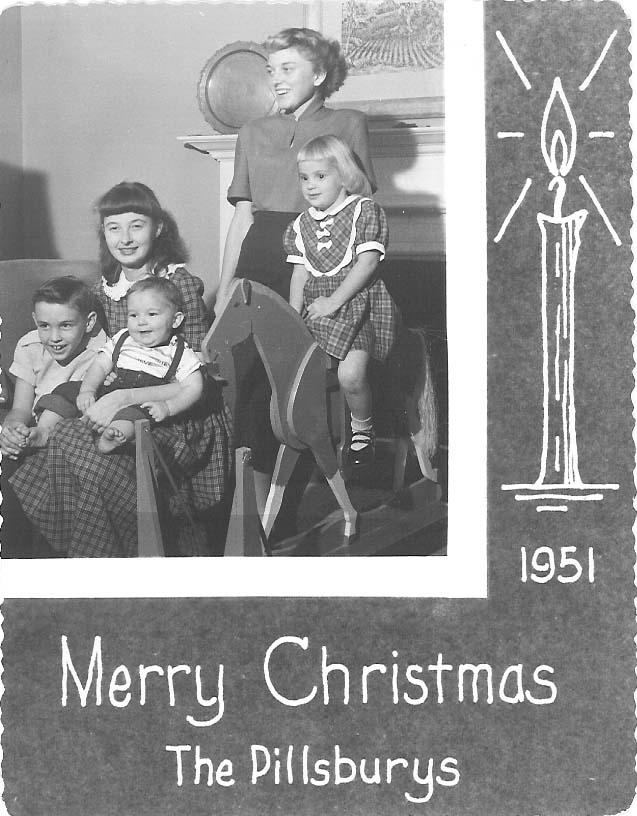
Our Christmas card the year I met Jimmy

Earlier this month the Fresno Bee published yet another article, citing someone who postures as an authority on the life and significance of James Byron Dean; this September 30th will mark the half century anniversary of Dean's death in a automobile accident in Cholame, California. During his life time James Dean was not famous. At the moment he died only one of his three movies to have been released was East of Eden. Rebel Without A Cause was not yet in the theaters.

When he died no one had yet considered the tiny body of work Dean left behind as his legacy. No one expected him to die. James Dean's movies represent the only tangible statement of his skill. But those movies in themselves proved to be a monumental commentary. The three films illustrate ability- that plumbs depths and exhibits an intelligence unusual in an actor only 24 years of age. The roles he created in those movies expand to dominate the screen against far more experienced actors. The intelligent portion of Hollywood understood that, but as with all professions only a few could see that. Most people who are fascinated by the magnetic appeal Dean was able to project ascribe that appeal to those causes that more define themselves than they do James Dean.

"He represents eternal youth," Legnon says, leaning on the memorial. "If James Dean had lived, he wouldn't be the icon he is. He'd just be an old guy, like [Marlon] Brando or Montgomery Clift or any of the actors that Dean came of age with."

It is easy for strangers to ooze opinion about someone when that person has been six feet under for a half a century. James Byron Dean died when he was 24 years old; he died having completed only three movies but those movies burn with the intelligence James Dean brought to every facet of his life. Many young actors are the product of the need in Hollywood for fresh meat. Not so with James Dean.

Shelby Legnon, who never knew Jimmy, says that if Jimmy had lived he would have been, “just some old guy, like Brando of Montgomery Clift.” No one could be more wrong. Legnon did not know him.

But his movies speak to those who possess the wit to understand.

Jimmy was an individual who saw clearly and who had values that were defined and honed through years of thought.

If he had lived Jimmy would have transformed the entertainment industry; injecting the vibrant ideas and values that moved him originally into acting. Because that industry supplies the memes and cultural content of so much that we, as Americans, live and breathe every day of our lives, and because the world watches us as the edge of cultural change, it is fair to say that James Dean would have changed the world. That was his intention and his aim; to impact the world through the craft of acting.

He understood how it could be used. He intended to use it.

James Dean had confronted such issues and the life of the spirit, mortality, the profound differences between people, and the ideas that drive the world when he was very young. He began life as a Mama's boy, enveloped in maternal attention. He shared with his mother a world of make-believe.; they also talked about ideas. That world was shattered when his mother died and he was relocated to Indiana to live with his aunt and uncle, two people who were decent, kind, hard-working and very different. He was a sensitive child. He did not forget his mother, he continued to remember and to grieve, creating an intense internal life of ideas. Those ideas eventually took him into acting. People who are highly intelligent and creative make their own rules.

I knew James Dean; he was no hormone-driven Hollywood wind up doll. He was insightful, intellectually alive and very aware of the kind of people and motives that confronted him in the reality of Hollywood, 1955. To be successful in Hollywood you had to play the games Hollywood expected. Jimmy understood people; he understood their limitations and their prejudices. He had learned to project what was expected of him.

The Hollywood perception of James Dean is colored by the timing of when he died and by the limited access he allowed to those whose approval he needed to succeed in the career he was passionately pursuing. If he had died three years later he would have had time to let Hollywood know who he really was; if he had died ten years later he would have changed Hollywood. But that is not what happened.

There was only one James Dean. How much of him you saw depended on how much it was safe for him to show.

Jimmy knew what Hollywood wanted him to be so that is what they saw. He was much more.

I have spent my life fascinated by ideas and James Dean was a major influence in creating that interest.

James Dean explained to me the process of photosynthesis by telling me when I was just a small child that, “Trees breathe; Live exists on Earth because the green growing things breathe in the light of the Sun and produce the oxygen that we, and all life, needs to survive.” An amazing way to make that process real and viscerally available to a child.

James Dean loved thinking about the processes of life. He loved books and the ideas that roil in the mind when that mind weaves the possibilities of what is now with what could be. He pounced on new facts with delight.

The first time I met Jimmy it was over Beanie sandwiches in the kitchen of the family home in West Los Angeles. He was a student; I was a kid. He was the kind of person who listened to children and responded thoughtfully, by which I mean he was able to connect and engage in a real discourse, not talking down to me but exploring the ideas that found their way into our conversation, introducing ideas as part of the text. With Jimmy if there was conversation there were ideas to discuss.

It was on that very first visit that Jimmy and I discussed mortality. It was the first time anyone had mentioned the subject to me. I had been watching a tortoise dissolve back into dust, so to speak. I had discovered the tortoise already very dead behind a bush in the back yard of the house. I was fascinated by the process of its dissolution as ants carried it away and it shrank into itself. I had not told anyone else because I knew how they would reaction. The tortoise would evoke shrieks and Mom would remove it.

Given a chance I hauled Jimmy back to look, too. Jimmy was delighted. He proceeded to tell me about observing the same process with a cow on a farm back home. Then, squatting down for a closer look, he told me that the essence of the tortoise, the thing that had make it move and live, was gone. The same happened to all that lived, he told me.

From that time on we talked about ideas whenever he showed up for a visit. Towards the end of the visits he had started talking to me about books he was reading and the ideas that excited him in those.

Jimmy was looking forward to a career; that career would only begin with acting. He mentioned moving on to directing and other work. He had been unhappy with the way a book he had read was made into a movie. The book was Fountainhead. He wanted to remake it because he thought the characterizations were flat and had failed to evoke the wonderful potential of the human life. I suspect now, looking back through a life time that has afforded me the opportunity to know more than I want about Objectivism, that if he had tried to do the remake he wanted Ayn Rand would have strenuously objected. Jimmy had a strong sense of spirituality that would have offended her. Jimmy would probably have ignored her objections. He was like that. He knew what he wanted and he was determined.

I have many memories of Jimmy; he always found time to talk to me and since we shared a fascination with ideas there was always lots to discuss. The essence of spirit, the past and how we know and understand it; the flow of time. All of these things were subjects we discussed. He did most of the talking, naturally. I listened carefully and asked questions.

Does a shallow, self indulgent kid greedy for fame and the potential for self importance and what fame can buy spend that kind of time with a child? No. Would that kind of discourse slip from the lips of an angst ridden pop tart? Hardly.

If Jimmy had lived he would not have become a fat, self-indulgent has been. He would have taken the capital he had created in name identification and respect and invested it in projects that pushed the edges of thought in new directions. Hollywood would have followed his lead because he was worth following. He would have started projects for kids in Fairmount, Indiana; he would have, perhaps run for office. He would have done good in all directions. He cared about people and he cared about the kind of world his generation would leave behind.

I know that to most people he exemplified the undirected angst of youth. Ironically the image he left immediately in the minds of most Americans was the product of hard work at the craft of acting. To see that perhaps Legnon should stand back and consider the intellectual vigor it takes to achieve that outcome. Jimmy was directed, focused, intent, inquiring and passionately interested in everything around him. That remains the unspoken and compelling presence that continues to fascinate, even if the viewer does not understand why.

I wish you could have known him. Then you would understand why he is worth remembering.

Thursday, June 09, 2005

Beatty vs. the Governor: Send Arnold back to Hollywood

I read with interest the article transcribed from a speech given by Warren Beatty today from the keynote address delivered at the graduation ceremony for UC Berkeley's Goldman School for Public Policy. While I agreed with the underlying sentiments expressed I found myself wishing Mr. Beatty had stood up for actors. Certainly there is no reason to assert today that actors contribute less to our common happiness and wellbeing than do politicians. I would make a case for the contrary. I know one honest politician but I have known several honest actors. And actors do not expect the lavish retirement accorded to members of Congress and the larger legislatures. They know if they don't give the audience what it wants they could starve. A laudable attitude that keeps them on their toes.

The state of California would be far better off if this actor turned governor were still making the same quality movies for which he was so well known.

So I would I suggest to Mr. Beatty that his respect for politicians is misplaced. We all have wish lists of issues but first and foremost America needs to return control of governance to the people and reinstall accountability in governance. That is after all, the original idea. That does not mean handing control off to a new form of aristocracy which is what politicians have become.

Being elected to office is the equivalent of winning the lottery.

It has been going bad for a long time but it was the idea that politicians can experiment on us that destroyed the basis of accountability. The ideas of the past, grounded in the failures of socialist thought and utility theory do not work. With the advent of socialism in the early 1900s the practice of installing clever ideas with no proof they would work became accepted. Theories are nice but should never be used without full liability for harm caused and a comprehensive impact study, not in business and not in government.

No-fault divorce, welfare reform, and other nifty ideas foisted on us through legislation have destroyed the expectations of generations of Americans. It has to stop.

And in a world where Americans cannot trust the electoral process discussing health care is like shuffling deck chairs on the Titanic.

We are as able to audit the accounts of those convicted of crimes like Enron as we are the ballots that elect our leaders. Therefore, America has no reasonable expectation of an honest vote. That should scare you. So, while I very much enjoyed the warm sentiments and insights of Mr. Beatty I would urge him to rethink his priorities.

Consider for a moment the retirement and benefits packages of those who serve. Definitely not what they voted up for us. Personally, if I had my way I would put the Congress on whatever privatized Social Security system they elect for us and give the elderly the retirement packages customized for Congress. To expensive you say? Just cancel the present war and we can afford it, I answer.

Which brings us to another issue on which I disagree with Mr. Beatty while sharing his sentiments. Taxation is not the best way to equalize wealth. The robber barons of California went after the money with the help of various legislatures and then bought respectability and acceptance, which was all too cheaply for sale. Being able to buy acceptability without fear of liability makes thievery carried out under the guise of “business” and “government” far too attractive. If this had not been the case, if liability were the disincentive it should be, then the problems with California's 'energy deregulation' would by now have resulted in the seizure of the ill gotten gains and hopefully restitution would have been rendered to those harmed. Jail time is far too good for them. Give them jobs at Walmart. Wealth is not the problem; what wealth makes acceptable to us is.

This kind of predatory behavior is not a recent development and predates both Mr. Beatty and myself.

Far from representing a forgotten era of capitalism the Roaring Twenties was alive with larceny, the legacy of law and practice already distorted by the growing partnership between government and big business that is only today reaching its full flower through the logical consistency of the NeoCons. The motto of these Grandees of Greed ought to be, “If you are going to steal, steal everything.” No one can deny they are efficient. Who else would have ended combat pay the second a soldier is wounded and then charged the injured for food and treatment while still in the hospital, rendering a bill on discharge?

One can imagine the murmurs of awe and respect issuing from the now dead lips of Nazi bureaucrats.

I will happily accord any politician the respect I give my plumber if he or she does the job as promised. Politicians deserve exactly as much respect and profit as they earn by fulfilling the duty they owe to those who pay their salaries. Perhaps at sometime in America's past being a politician meant a life of service but for longer than either Mr. Beatty of I have lived being a politician in America has meant, for most of those 'called' to that profession, serving up Americans to the interests of power. Being an actor is a profession far more worthy of respect. Honor is in any work well and honestly performed, not in the kind of work. Any actor posing as a corpse can tell you that.

So, Mr. Beatty, give actors the respect they deserve. I'd rather have a bad actor acting than one playing politician any day.

Thursday, June 02, 2005

Faith and Religious Practice: Quantum Consciousness

When we accept the presence of the sacred in our lives and begin to listen to the flow of spirit coming to us from a place unseen we are confronted with a profound choice. Will we choose to hear or will we shoulder past the ineffable and continue on our way, ignoring what our minds tell us is irrational?
No choice comes without risks. But what is risked is not necessarily apparent, either to the one confronted or to those watching the logic of choice work its way out into the material circumstances that will record the totality of our individual lives.
The verities of the religious experience may be very different than we have thought.
This goes to several questions. One of these touches on the nature of reality, which we are beginning to understand through the insights offered through quantum physics as very different that previously believed. It is not the finite, knowable world that we saw it to be at the beginning of the 20th century. Most human institutions still rest on the assumptions of that century if not on an even earlier century. The structures of human institutions, born from the ideas of generations past, function as repositories for the conservation of moral and institutional capital and are therefore falling edge indicators for coming change.
This takes us to the question of faith, not in the way we have traditionally understood this but in a new way that I characterize as quantum consciousness. According to quantum physics each part of the whole, no matter how far removed from all others, is actually in immediate and intimate contact. This means that the faith derived article of belief stating that all life connects is literally, physically true, the spiritual then being understood as an aspect of our nature heretofore seen as separate and problematical.
But if we are all cojoined, both with our own spiritual nature and with the material world that extends from that nature then this is not faith but intuitively derived truth. There have been indications for a long time that those arenas of human insight, including art and literature, actually function as predictors for oncoming waves of change in how we perceive the nature of reality.
Dr. Leonard Shlain's book, Art and Physics, Parallel Visions in Space, Time, and Light, notes the relationship between the underlying conceptualizations in edge art and their predictive function in physics.
What, then is intuition and how can we use it as a tool for human progress?
Is religious intuition a partially understood means through which we as humans may understand our own nature and progress towards some unseen horizon? This would seem to be the case. But as with all intuition this is subject to interpretation filtered through the veil of ideas each of us uses to construct the immediate nature of our everyday reality. Because we see through those filters of our own internal experiences we use iconic representations that provide a context for meaning. This in large part explains the difficulty in communicating between individuals coming from different perspectives. But only in part. We can also be mistaken about what specific iconic representations mean to others seen through cultural filters when we translate these into language.
Assumptions about what may seem obvious are a constant block to real communication.
We are spirits living in bodies that see the world through images, language and ideas that may vary widely in understanding. Our backgrounds, genders, cultures, level of spiritual development, education, age, and other factors moderate our 'beliefs.' Our beliefs create the reality with which we react and interact with others.
We are spirits in process of becoming. What we are becoming lies beyond the horizon of our ability to understand. But if we are connected in the way that intuition and quantum physics now indicates then the comfortable and artificial limits we have provided through human culture, practice and religion are as fragile as a curtain suffering long exposure to the sun. It is ready to tear and only our assumptions are holding it in place. Those assumptions are what created it in the first place, let's remember.
So what does this mean to us as individuals and as a people? It means that as individuals we need to confront the nature of the world in which we live and the nature of the world that lives in each of us. Today that need is greater because we are living in a time of transition. Every institution of humanity is showing the strain of long use that has worn it to shreds. Those institutions, forged from the ideas originating in the human mind, are failing because they are not modeling the coming change in consciousness that has been so long predicted.
Baldly stated, that change is from a hierarchal structure for human organization to a flatter, matrixed model for human relations. Equality expressed spiritually.
This is evident everywhere, even in the excesses of hierarchy reaching its logical conclusion as a form of resistance to change. In politics today it can be understood as the one predicted Rapture, that being in truth, the realization that all are one, Christians seeing this as a union in the spirit of Christ, others seeing it through the explanatory iconic representations of their own belief systems. Interestingly enough, nearly all human religious have predicted a transition in this period of time, another argument that the intuition driving these visions has predictive value.
As with all monumental transitions this one is tumultuous, impacting many in immediate ways.
The form and content of churches, giving place to the continuing human need to experience the sacred, are changing in unexpected ways that are leaving members of the older generations bewildered and isolated. The cognitive process to which the younger generations have been subject may well have changed them organically far more than we yet understand. The familiar structure of the human experience, firmly invested in a hierarchal world view is rapidly growing flatter through a series of punctuating events. This bald fact has been observable in business, with the downsizing of the Fortune 500 through the collapse of middle management with the advent of the desk top computer. This has been balanced by the almost hysterical desire of those in positions of power to hold on to the past by accumulating reservoirs of wealth.
The effect of quantum consciousness first appeared in venues for human action that were most easily modified by the forces of market choice. America, representing the optimization of freedom remained a mystic beacon for human hope even as the objective conditions that had made this true were diminished. Where choice is possible, in religion, in occupation, in relationships, choice has been exercised with growing frequency. We are seeing it last in government and other organizations that fail to allow for the modifying power of individuals voting with their feet and finances.
Quantum consciousness is the realization of human freedom, not in the political realm but in all parts of all venues for action.
Individuals from all parts of the world have accepted the idea that they should by inherent right be free. All of us are now trying to understand what freedom means practiced in the individual life. Our beliefs and the hope it generates may be changing the larger direction through the compiled force of quantum consciousness itself. Nothing is separate, as we are coming to see.
The body of human knowledge has increased exponentially. It is no longer possible for any one human being to know everything in even a subsection of one discipline when only ten generations ago it was possible for one individual to have working knowledge of the whole of human knowledge derived from Western Civilization. This rate of change has only shifted upwards with the interface created by the presence of the Internet and other means for the dissemination of memes that would previously have taken years instead of seconds or minutes to change the idea sets of individuals across divides of space and time.
So what does this say about how we should view religious practice?
With respect, with an open mind and with the view of understanding it as an overlooked tool for human understanding of the entire human experience.

Evangelicals are hypocrites: Do not emulate them.

Evangelicals are hypocrites: Do not emulate them.

It is all well and good to call for the signing of endless petitions asserting some kind of ownership in a belief in Christ, but those are empty words. No one owns the message; but each of us can deliver it. How we do that tells everyone whether or not we are living in the Work.
It is not hard to tell. No one mistakes the concentration camps as acts of Christian love. No one who really looks and listens can believe that the evangelicals now pounding their chests and staking out the moral high ground are about anything but deceit. That many of them may be deceiving themselves as well is pathetic.
Those evangelical Christians who offend by using words to change His message are not acting as Christians. But are you? Christ is not about politics in the sense that politics can be used to force others to act. Christ is demonstrated in us when we act as Him, allowing the Gift of His spirit to move us in our own lives.
Sorry if this seems unkind but it should be so obvious. I spent most of my life as an atheist until Christ claimed me. But now I have no doubts.
Reclaiming Christianity cannot be done with words. As the gift was given so must it be lived. Only your acts have the power to affirm His message. Consider for a moment the message of Christ.
Christ gave us his body and blood as a meal to satisfy our needs. He did this freely. He could have at any time avoided the pain of torture and crucifixion. He welcomed it. This was not in His words but in the sacrifice of His human life on the Cross. That was the first part of His gift, but not the greater. The fact of His eventual death was determined at the moment he was born. What could death, even death on the Cross, be to the Son of God who clearly saw beyond its veil?
That death meant nothing. But then, He rose from the grave and appeared again among His followers to speak and to teach. He told them He had still one gift to give. And this time He gave His Spirit. It was not in words that He gave His spirit to dwell in each of us. This He did as a tangible, living act that broke His spirit like the loaf of bread He had held in His hands at the last Supper. After that moment in time we dwelt in Him, as He lives in us, all of us. It does not matter if you believe in Him, He lives in each of us no matter how we doubt and fear.
He has given this precious gift to each of us.
His actions changed the course of history. Because of His acts today we are different. The reality of his acts and Gift sent a message into the world that became greater than its parts. This happened because Christianity was not founded on words but on actions. If you would reclaim Christianity then you must retake it by the compounded acts of your life speaking out the simple but profound beliefs spoken by Jesus with His own life.
We are One in Him. What you do for anyone else so do you do for Him, directly and immediately. Love others as yourself. Love yourself so that you can love others.
This was foundational to the beliefs of the church Christ left behind in trust.
It was this belief made manifest throughout the first centuries of Christianity that changed the face of the world, moving humanity towards a vision of love and unity through the life of one Man.
As it was so it is today.
So toss that petition in the trash can. Now take your life, which is a gift from God, and make with it the living reality that speaks the essence of the message and the reality that is our living gift from the Messiah. Make your own statement. By so doing you will confound those who misuse Him.
Instead of requesting that someone else, in this case the government of the United States, care for others take up the duty left to you by Christ and do it with your own hands. In so doing you can bring the consciousness of Christ back into the world. Where there is disease, heal, as did the Christians of the early years.
In those early centuries the cities of the Roman Empire were frequently subject to plagues that killed thousands. As a practice, pagans had abandoned their own relatives to die when they fell ill. But early Christians, recognizing these victims as extensions of the Body of Christ, made them comfortable, feed them and tended to their needs. As a result as many as 70% lived. This was living the Word; the extrapolation of faith into acts.
The early church was a tool for making the Word real in the sight of all humanity. They heard and came. But this process was not through preaching words but in the eloquence of action.
There were many reasons for becoming Christian. To be Christian was to be persecuted, marginalized, despised. But it was also a force for change and the least among pagans saw, heard, and came.
For a woman becoming Christian meant that she owned herself. She could not be sold into marriage when she was as young as 10. She was not required to abort or kill her babies if her husband did not want them. She controlled her own property. If her husband died she was not given back to her father to be sold again into marriage. She could control and sell her own property and hold positions in the early Church. Many early Christian women did just that.
The promise of freedom built an early church culture of benevolence and love. 60% of early Christians were women. We know these things from careful study of the objective facts left behind, not from the obfuscations of later generations of 'church fathers.' Read the Rise of Christianity by Dr. Rodney Stark, a study in the sociology of the early church if you doubt.
The human spirit was hungry for more than food. They also hungered for freedom, especially the least of these, women. Women had no standing or rights in the pagan world.
That was the living truth on which Christianity flourished, the living word of Christ in works.
Where there was hunger, they feed that hunger. In a world that hungered mightily for freedom Christianity was a feast of the spirit. We know Christ today because that early church feed all of the hungers of a humanity with many needs.
We hunger for freedom today as much as for food to fill our bellies.
Where there is want and lack fill those needs.
It is much easier today than it was 2,000 years ago.
Now we have cooperative organizations enabled through our culture that allow us to donate, work, teach and heal with our spare time. Because we are more productive we have spare time. Go into your own community and see what needs to be done. Then do it.
Given the direction of the government of the United States and the message now being delivered by the Evangelicals awaiting the Rapture in the Rose Garden, there is, every day, more to be done.
Stop giving unto Caesar what is not due to him. Today you can choose. You can start giving to those who hunger for all of the things that the early church gave to those who they touched. Those things are still needed. You can hold up a mirror that makes the lies that offend you obvious to all who see.
But do it from your own heart, from your community, and from the love that Christ gave you without using the coercive power of government.
Christ never voted for the lesser of two evils and neither should you.

Monday, May 30, 2005

A Lovely Tea at the White House with Laura Bush!

Jacque Stafford of  Colorado, a good friend.
(Melinda took the picture)

 
Thanks for the Memories 
The White House – May 11, 2001
By Melinda Pillsbury-Foster

The tea was held upstairs, past open doors that held the portraits of First Ladies and mementos of previous administrations. The People’s House is large enough to hold all of the variations of which America is capable. Therefore it must be large, more on the inside than in any other dimension.
We scaled the broad and beautiful stairs while listening to the floating music of a military string quartet that played in the foyer across a gleam of marble flooring. The music drew us on.
Various of our number stopped to study the portraits of the presidents that hung on the walls and more than a few paused in front of the bust of Lincoln that gazes into a place far away at one side of the hallway.
   The People’s House hushes voices and fills the heart with pride.                                                                   
  We have known so many disappointments and failures. The light was gold and clear drifting down to touch the marble and gleaming carpets.
The event was everything any of us imagined it could be. We had dressed accordingly.
The tiny pastries epitomized all that is delicious. As rapidly as we could empty the trays they were replenished by the hovering servers. Our noble best did not suffice to empty even one before it was whisked from sight to make way for another.
The day was warm. So instead of sipping hot tea our thirsts were quenched by the most excellent iced tea, delicately flavored with just a touch of mango. Cautioned not to take souvenirs a few of our number did tuck a single paper napkin into a dainty purse.
We basked, remembering the hours of labor that each of us have invested in bringing this administration home.
Pictures were taken, smiles and words exchanged with the First Lady. She shared with us her hopes for a better tomorrow through her work for all children everywhere. Her hopes were made tangible and accessible through programs that enable each to work within their home and community. We listened, moved and delighted with her simple informality.
The contrast served to remind each of us that this administration is very different from the last.
The People’s House is large. It is not so much a home as a symbol and destination for thoughts and deeds. We snapped our own pictures; unofficial mementos to be savored over and over again through the months and years ahead.
Tea. Pastries. Music. A lavishing of thoughts and a reminder that the building is a symbol of things we cannot touch. Those things we can and did take with us.

Laura, two other NFRW Regents, and Melinda in red

Raspberry Gumballs and the President

Raspberry Gumballs and the President As told by Little Carolyn to her Mom.

Please note that in 2012 much of the anguish suffered by my parents and others in the family was explained when I realized 'Little Carolyn' is a psychopath.  Accepting this was devastating, but necessary.  Recognizing the signs of psychopathy are important to all of us.  No matter how painful it is better to know and take action to protect ourselves and others we love.   January 27, 2017.


She hungered for raspberry gumballs. These ecstatically wonderful delights could only be had from the gumball machine at the local Safeway Market. She knew it was after curfew. This limitation was an annoyance that had been mandated by frisky high school students wandering through the night looking for very different excitements. This could not apply to her. She was law-abiding and careful of the proper rights of others.
Little Carolyn was always a law unto herself.
She got dressed. Her aunt would never know. She could almost taste the gumballs now.
The Safeway was just a few blocks away, a matter of a five-minute walk. She had often ventured into the night on some such small adventure, but this time it would be very different.
The place was pretty quiet except for a clutch of people around the checkout stand at the other end of the store. Little Carolyn, standing around 4’ 8," ignored them, eyes firmly on the source of coming delight.
The coins clinked into the slot and she turned the handle. The machine groaned, coughed, and fell silent. No raspberry gumballs appeared in the spillway. She tried again. Still no gumballs. She knew that appealing to the store manager would result in a smirk and dismissal. That had happened all too often. The gumball machine seemed to be sneering at her.
"Hey! You can’t shake that machine!" Little Carolyn looked back to see a friend of her grandfather’s glaring at her. She had to look way up as he was well over six feet.
"It stole my money and it is not going to let it get away with it – this time." She returned to her activity. Smack.
Little Carolyn felt herself seized bodily and hauled off.
"Apologize to the Manager, Carolyn. Your grandpa is going to be very upset when he finds out."
"No. This machine steals my money and the manager won’t give it back or fix the machine. He promised he would the last time. Grandpa would say I was right to insist on having the gumballs. He might not have wanted me to hit the machine but…."
"But we do not smack machines. They aren’t our property."
"So I guess it is alright to steal from kids?" She looked up into the face of the 40th president of the United States, Ronald Reagan who had paused while bagging his own groceries in Goleta, California in 1981 to intercede, recognizing the grandchild of an old friend.
Little Carolyn would be hauled off by a grim faced President and his accompanying Secret Service cortege and deposited home into the horrified custody of her aunt. She remained unrepentant.
Authority misapplied that ignores the proper rights of individuals was the issue. It is too bad that with the best intentions in the free world President Reagan failed to see this small revolution as what it really was. Standing up for your rights includes the gumballs – even when authority wants you to shut up and just take it.
Maybe if it had been jelly beans he would have understood.
(The above story is the honest God truth and took place in 1981. I sent a copy of this to Mrs. Reagan on the occasion of the President's birthday in 2003.)


God Bless you, Mr. President